“I have always thought of myself as a teacher the way other people of think of themselves as gardeners, painters, composers, mathematicians, and poets. I am a craftsperson of learning…”
(Kohl, 1998, pg. 10). Before the titles, before the credentials, before the organizations, teaching was the throughline. As a scholar and scientist, I was trained to ask precise questions, to honor evidence, and to respect the discipline required to move from curiosity to clarity. As an educator, I learned early that knowledge alone does not change outcomes. Context matters. Systems matter. Relationships matter.
My early work in a genetics laboratory sharpened my analytical lens. It taught me how complex systems behave, how variables interact, and how small shifts can produce outsized effects. However, it was my early years in secondary education that initially caused my calling to stretch. I did not want to simply teach in schools. I wanted to change the business of school. I wanted to understand why sound ideas stalled at implementation, why policy so often felt disconnected from classroom realities, and why educators were frequently positioned as recipients of decisions rather than contributors to them.
That curiosity carried me beyond the classroom and into the broader education ecosystem. My work within state education systems exposed me to how policy is interpreted, operationalized, and constrained at scale. My leadership in higher education, particularly in assessment and accreditation, deepened my understanding of accountability, quality assurance, and the invisible structures that shape educator preparation and professional learning. Moving across these spaces—from the classroom, to the lab, to state systems, to higher education, gave me a panoramic view of education as an interconnected system rather than a collection of isolated roles.
Just as important, it gave me perspective and relationships. I learned how decisions are made, who holds influence, where data is leveraged well, and where it is misunderstood or misused. I saw the distance between intent and impact, and the cost of that distance to students, educators, and communities. Verbalizing Visions LLC emerged from that lived tension.
The capacity of Verbalizing Visions is inseparable from my background as a scientist, scholar, educator, and entrepreneur. We are built to translate research into action, policy into practice, and ideas into systems that can actually sustain them. Our work integrates inquiry, experiential learning design, reflective leadership development, and strategic facilitation. We operate across sectors because we understand their languages…and their limitations. At our core, we help leaders make meaning, build alignment, and move with intention within complex systems.
This foundation has shaped my leadership within the Education Leaders Experience (ELE), a ten-month professional learning experience for K-12 higher education leaders. I entered ELE in its fourth year as a lead facilitator and internal evaluator at a pivotal moment in its evolution. My role was not to create the experience, but to help deepen it—strengthening its coherence, sharpening its learning design, and grounding it more intentionally in reflection, systems thinking, and lived policy context all within a fully virtual environment. This was during Spring 2020 when in-person convening were impossible and leaders were navigating the COVID-19 pandemic in real time. Designing for connection, inquiry, and trust in that moment required ELE to become more deliberative, more reflective, and more aligned with the realities leaders were facing. That inflection point marked a shift from adaption to intentionality, position ELE to mature into a decade-long effort, now in its tenth year, with a clearer theory of impact and a stronger alignment between purpose, practice, and participant experience.
Through the collaborative leadership among Colonial Life, the Center for Educational Partnerships, regional workforce advisors from the SC Department of Employment and Workforce, and Verbalizing Visions, ELE has functioned as a living learning system. Rather than operating as a fixed program, ELE is intentionally designed to evolve in response to the needs, questions, and realities leaders bring into the space. Participants engage in experiential learning grounded in authentic contexts that expand their understanding of education within broader workforce and community ecosystems, helping leaders see connections and opportunities often obscured by role-specific silos.
Reflection serves as a core leadership practice within ELE. Structured reflection is embedded throughout the experience to support sense-making, adaptive thinking, and alignment between values and action. Participants examine how their identities, experiences, and environments shape how they lead, particularly during moments of uncertainty and change. This reflective practice becomes a tool leaders carry back into their organizations, strengthening decision-making and leadership coherence over time.
Impact statements from ELE participants demonstrate consistent and meaningful shifts in leadership perspective, practice, and intent. Across cohorts, leaders describe expanded awareness of how education connects to community, workforce, and local economies, with repeated emphasis on purpose, resilience, adaptability, and people-centered leadership. Site-based experiences with farms, small businesses, cultural institutions, manufacturing, libraries, and corporations surfaced the value of mission-driven work, ethical decision-making, and community over competition. Many participants noted a renewed commitment to preparing students for multiple postsecondary pathways, including careers and trades, and a clearer understanding of how real-world skills such as problem-solving, collaboration, and adaptability align with local workforce needs.
Participants also reported changes in how they understand and enact leadership. Reflections frequently referenced increased confidence, clarity of purpose, and a shift away from position-based authority toward influence grounded in relationships, listening, and trust. Leaders described becoming more intentional about partnership-building, communication, and stakeholder engagement, as well as more reflective about how identity, values, and lived experience shape decision-making. Several noted concrete changes to their practice, including rethinking work-based learning design, strengthening community partnerships, refining communication structures, and fostering team cultures centered on respect, belonging, and shared responsibility.
Collectively, these impact statements indicate that ELE strengthens individual leadership capacity while also contributing to a broader culture of connected, purpose-driven leadership. Participants consistently articulated a deeper sense of responsibility to serve students, colleagues, and communities with intention, adaptability, and integrity. The experience not only broadened perspectives, but also reinforced a shared commitment to leadership that values people, builds resilience, and leverages community assets to create meaningful and sustainable impact.
At its core, my call to teach has always been a call to reach beyond classrooms, beyond roles, and beyond inherited ways of doing school. Verbalizing Visions LLC is where that calling takes form as leadership development grounded in clarity, connection, and systems awareness. For me, leadership is teaching at scale, creating conditions where people can see systems more clearly, make meaning together, and move within them more wisely. My leadership in the Education Leaders Experience reflects this work by stewarding spaces for learning, reflection, inquiry, and relationship. ELE is one way Verbalizing Visions shows up in the field, reaching leaders where they are, honoring what they carry, and equipping them to shape what comes next with clarity, courage, and care.
References
Kohl, H. (1998). The Discipline of Hope. New York, New York: Simon & Schuster
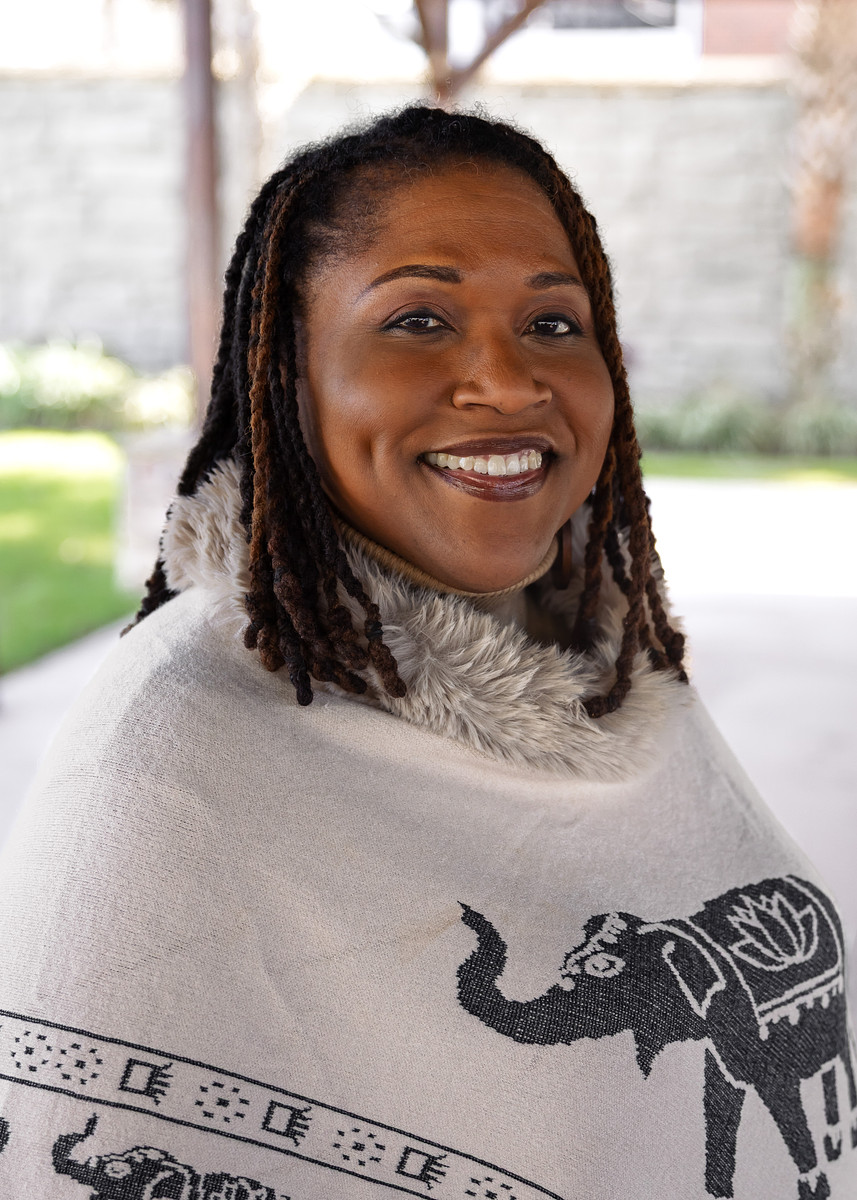
Dr. Regina Ciphrah is a scholar, scientist, and educator who serves as CEO of Verbalizing Visions LLC. With experience spanning the genetics lab, secondary classrooms, state education systems, and higher education, she designs leadership experiences that connect reflection, systems thinking, and real-world impact. A proud Gullah woman from Georgetown, South Carolina, she brings curiosity, care, and community into everything she builds.