I’ll get right to it. Our school system treats reading as a hierarchy of intelligence, a skill for the future self to succeed in life. I think we are focusing too heavily on the skill of reading and missing what reading is really about: a deeper connection to the world and to ourselves, and how to build a world worth living in. If you teach middle school, you might be nodding along. It isn’t just my opinion. By middle school, intrinsic motivation to read has declined for many of our kids, and it’s heartbreaking.
I’ll spare you the torturous journey a single mother takes to get her two middle-school boys, Logan in sixth grade and Pierce in fifth, to bed on time. Most nights, exhausted from waking at 4:45 a.m. and teaching fifth grade all day, I bring out more colorful adjectives than my best self. It usually ends with me wondering how I got to a point in life where my dog listens better than my own children. Heavy sigh.
Fast-forward. Teeth are brushed (yes, my middle school boys still require reminders of routine most nights), and the boys are cuddled into my bed, where they still prefer to read. I have yelled at one to stop putting their toes under the other’s legs, and now we are finally settled. The funny thing about parenting middle schoolers is that the journey to do the thing, in this case, reading together, seems like a fight almost every night. However, once we begin, the magic takes over again, and I remind myself it was worth it.
We are reading a book I highly recommend, The Remarkable Journey of Coyote Sunrise by Dan Gemeinhart. We come to the part where Coyote (our main character) is battling with her feelings of losing her mother and sisters earlier that year in a car crash. She is unsure how to bridge the subject with her Dad, but she knows that if she doesn’t soon, her emotions will eat away at her soul.
My youngest son, Pierce, snickers, “Mom, are you crying again?”
Logan interjects, “Mom, you know this isn’t real. You don’t have to cry every time we read.” I struggle to hold back ugly tears. “I can’t help it. Can you imagine how she’s feeling? She is dealing with so much and can’t even talk to anyone. It’s unfair to be strong for your parents, don’t you think?”
Logan, “Yeah, that Dad is selfish. He’s acting like a child.”
I add, “I don’t know. I think grief hits people differently. I don’t know if that’s fair to say. He obviously still loves his daughter. He just isn’t ready to face his sadness. Maybe he’s afraid he won’t be able to be present once he faces his feelings?”
Pierce, “This story makes me miss Daddy.”
Logan, “I barely remember Dad. I remember how he smells. Like diesel fuel.”
Pierce, “I remember him playing music really loud in the car. Countryyy music.”
Now laughing, I admit, “You know, I avoided washing his shirts for so long to hug that diesel fuel smell. Whenever I wear one of his T-shirts, I still try to see if I can smell it. And every time you sing a country song, you remind me of Daddy, Pierce.”
Logan, “Hopefully, Dad sang better.”
Ignoring the typical older brother jab, Pierce somehow brings our conversation back to the book we are reading: “Can we go on a road trip like them and do Drop Everything and Drive Dreams?”
I think of the book and how the Daughter and Father, despite their grief, find solace in each other by chasing these small dreams, places, and goals they hit along the road. I smile.
Logan pipes in, using the acronym from the book, “My D.E.A.D. dream is to go to a McDonald’s in every state.”
Pierce, “I gotta think of what I want. Maybe to visit a rollercoaster.”
“You know what mine will be. We hike or do yoga together in every state without hearing anyone complain,” I daydream, actively tuning out their heavy sighs of disgust at my suggestion. I add, “I think this is an awesome idea. Let’s start planning it for next summer. See all the states. I love it.”
Pierce, “Fine, let’s finish this chapter. I’ll read so you won’t slow us down with all the crying.”
I reply, “Ha! Thanks. Logan, you want to read a little?”
Logan, “Heck, no. I did enough reading in school. My brain can’t take it.”
As I remember this conversation, it dawns on me how commonplace this one night is for us. This is not a reading skill; the benefits would be hard to measure. Yet no one could deny that this is reading as an art, an act of sharing creativity, emotions, and experiences. It is my two boys witnessing the vulnerable side of their mother, crying because these characters gave us a safe catalyst to feel deeply without threatening their sense of security. Our bedtime routine has matured with us, shifting the balance from mother and child onto an even playing field: three humans navigating what it is like to be human, together. I don’t think my boys know what a treasure this practice has given us, but I do. So how can anything that demands such emotion and connection be anything but art?
What happens during our bedtime routine also happens, in a different way, on the classroom rug each day. At school, my fifth-grade class’s read-aloud practice has sparked deep conversations that foster connections, just as in my family. As a teacher, I often find it the most joyful time of my day, yet it is one of the few parts of the day that aren’t tested or included in our curriculum’s master schedule. Despite these obstacles, I continue this practice because I believe it is helping my students as art often does, through the heart and soul.
Discussions ranging from family origin stories and feelings about divorce to children sharing strong opinions about the environment or debating whether the Earth could be flat are just a few examples of the conversations I have facilitated during shared reading. All to say, I genuinely believe that our classroom’s read-aloud (our form of shared reading) fosters a sense of school family by allowing thoughtful, safe, and vulnerable conversations to come to life on an eight-by-six square rug covered in flowers.
This emphasis on “teaching” children how to read is subliminally pressuring our teaching practice into a checklist task, rather than an enjoyable, critical activity. So I invite you to see literacy instead as an art form.
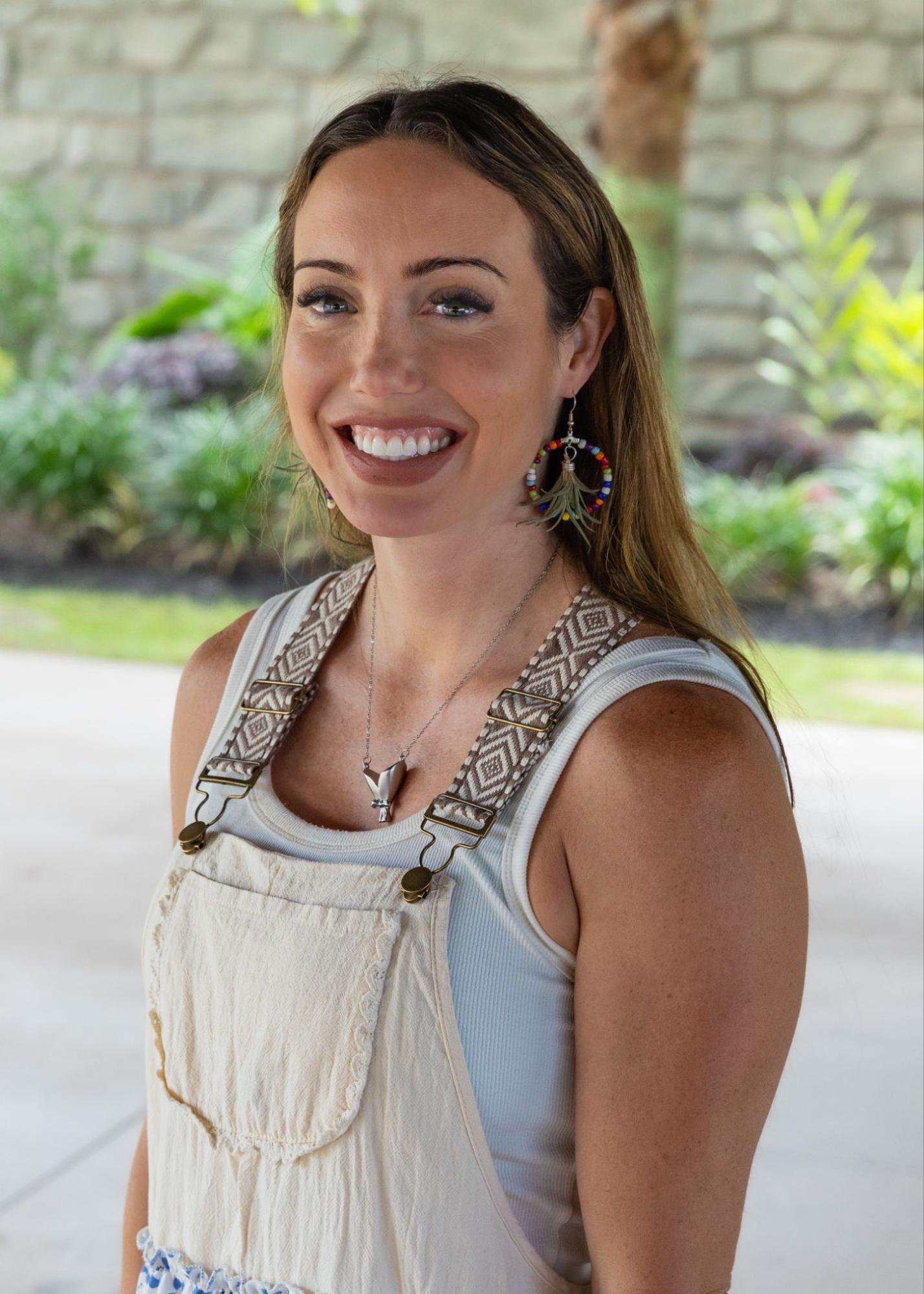
Dr. Kelly Rorvik is a fifth-grade teacher working in Greenville County Schools. Before teaching in South Carolina, she taught in Pennsylvania for over ten years. When she is not teaching, she is hiking with her dogs or watching her sons play football.