
Every legislator, district leader, and funder who cares about student outcomes is looking for the same thing: the highest return on a limited dollar. We argue that investing in your teachers is where you will find the highest return. It is the teacher at the front of the room — and the most cost-effective way to raise that teacher’s quality is high-quality professional learning.
The evidence is not in dispute. Professional learning that is sustained, content-rich, hands-on, and built around real collaboration changes how teachers teach and how much students learn (Darling-Hammond et al., 2017; Desimone, 2009). The familiar alternative — the one-day workshop with no follow-up or the 1-hour workshop thrown into a workday or at the end of a long week — has been shown again and again to change almost nothing (Pianta, 2011). We already know what works. The question is whether we are willing to fund it.
A relatively small investment in high-quality professional learning can transform a good teacher into a leader who lifts an entire school, and the dollars per teacher are modest next to the impact they create.
In rural South Carolina, the Building Leadership Among Science Teachers (BLAST) program is proving exactly that. Funded through the National Science Foundation’s Noyce program and led by the University of South Carolina and Clemson University’s Colleges of Education, BLAST is taking 28 strong K-8 teachers in high-needs rural districts and, over five years, developing them into science teacher leaders. The design reflects everything the research shows matters: a five-day Summer Institute grounded in rigorous, standards-aligned science; 16 tailored online learning modules over two years; monthly one-on-one coaching; multi-day leadership conferences in years 2-5; and support for attending and presenting at state and/or national conferences. Principals are brought in as partners because science reform only takes hold when school leaders understand and champion it (McNeill et al., 2022).
Twenty-eight teachers is a small number. That is the point. This is not a sweeping, expensive overhaul. It is a focused, modest investment in the right people — and the ripple is anything but small.
What our Teachers are Doing
The most persuasive argument for this kind of investment is not a research study. It is a list of names.
After just two years of the program, BLAST Master Teacher Fellows are already being recognized as leaders and pulling new resources into their schools:
- Stephanie Long was named CAP SC Wing Aerospace Teacher of the Year.
- Katie Shaw earned FSI Teacher of the Week and 2026 Newberry Middle School Teacher of the Year — and won a $5,000 grant to modernize her school’s science lab.
- Shaunta Harris was named Laurens Elementary Teacher of the Year for 2025-2026.
- Daniel Wicker secured a $5,000 Burns & McDonnell STEM grant for his school.
- Tonya Fowler earned the 2025-2026 SC State Championship First Lego League Coach/Mentor Award.
- Chastity North was named Teacher of the Month and invited to present to her school board and lead a session at her district’s professional development day.
- Jessica Rickborn was named Dorchester 4 Teacher of the Year for 2025-2026.
- Dorrell Benjamin was named Florence 1 Teacher of the Year for 2025-2026.
- Amy Petty was named Union County Teacher of the Year for 2025-2026.
Read that list as one story. In two years, these teachers collectively earned multiple Teacher of the Year honors, regional and state recognition, invitations to lead at the board and district level, and at least $10,000 in new grant funding — money flowing directly into lab equipment and STEM resources for students who have the least.
In two years, a single cohort of supported teachers brought home a stack of Teacher of the Year awards and more than $10,000 in new grants for high-needs schools; that is what high-quality professional learning buys.
These are not happy accidents. They are precisely the outcomes the program was built to produce. Give a strong teacher sustained, content-rich, leadership-focused support, and that teacher starts to lead — mentoring colleagues, winning grants, coaching championship teams, and reshaping science instruction across an entire building.
Why this matters most where resources are thinnest
This is happening where it counts. The National Academies have documented deep disparities in the quality and quantity of science education available in rural communities (NASEM, 2021). Rural schools are surrounded by the natural world that brings science to life, yet their teachers have historically had the fewest opportunities to grow (Showalter et al., 2019). BLAST’s partner districts serve communities where most students live in poverty, and many are students of color (SCDE, 2021).
In these schools, a single well-supported teacher is a force multiplier. When a fellow wins a grant for lab equipment, takes a robotics team to a state championship, or steadies a struggling colleague, the benefit lands on the students who need it most.
The fastest way to close the rural science opportunity gap is not a new building or a new mandate; it is investing in the teachers already standing in those classrooms.
How can we help
To legislators: we need you to fund and expand programs that deliver sustained, high-quality professional learning for science teachers, especially in rural and high-needs districts. We need you to invest in teachers so our students can grow.
To district leaders: protect the time, coaching, and leadership opportunities that let your best teachers grow and lead. Provide opportunities for them to learn what they need to be more effective and then provide the support they need to implement the changes they learn about.
To funders: there are few investments in education with a clearer, faster, more visible return. Invest in our educators.
The cost is modest. The return — better instruction, teachers who stay, new resources in classrooms, and students who finally get the science education they deserve — is enormous. The teachers of BLAST have already shown what is possible. The only remaining question is whether we will continue investing in them.
NOTE: This material is based upon work supported by the National Science Foundation under Grant No 2243496 and 2550870. Any opinions, findings, and conclusions or recommendations expressed in this material are those of the author(s) and do not necessarily reflect the views of the National Science Foundation.
References
Darling-Hammond, L., Hyler, M. E., & Gardner, M. (2017). Effective teacher professional development. Learning Policy Institute. https://learningpolicyinstitute.org/product/effective-teacher-professional-development-report
Desimone, L. M. (2009). Improving impact studies of teachers’ professional development: Toward better conceptualizations and measures. Educational Researcher, 38(3), 181–199. https://doi.org/10.3102/0013189X08331140
Garet, M. S., Porter, A. C., Desimone, L., Birman, B. F., & Yoon, K. S. (2001). What makes professional development effective? Results from a national sample of teachers. American Educational Research Journal, 38(4), 915–945. https://doi.org/10.3102/00028312038004915
McNeill, K. L., Lowenhaupt, R., Cherbow, K., & Lowell, B. R. (2022). Professional development to support principals’ vision of science instruction: Building from their prior experiences to support the science practices. Journal of Research in Science Teaching, 59(1), 3–29. https://doi.org/10.1002/tea.21717
National Academies of Sciences, Engineering, and Medicine. (2021). Call to action for science education: Building opportunity for the future. The National Academies Press. https://doi.org/10.17226/26152
Pianta, R. C. (2011). Teaching children well: New evidence-based approaches to teacher professional development and training. Center for American Progress. https://www.americanprogress.org/article/teaching-children-well/
South Carolina Department of Education [SCDE]. (2021). Active student headcounts: 2020-21 [Data set]. Retrieved from https://ed.sc.gov/data/other/student-counts/active-student-headcounts/
Showalter, D., Hartman, S. L., Johnson, J., & Klein, B. (2019). Why rural matters 2018–2019: The time is now. Rural School and Community Trust. https://files.eric.ed.gov/fulltext/ED604580.pdf
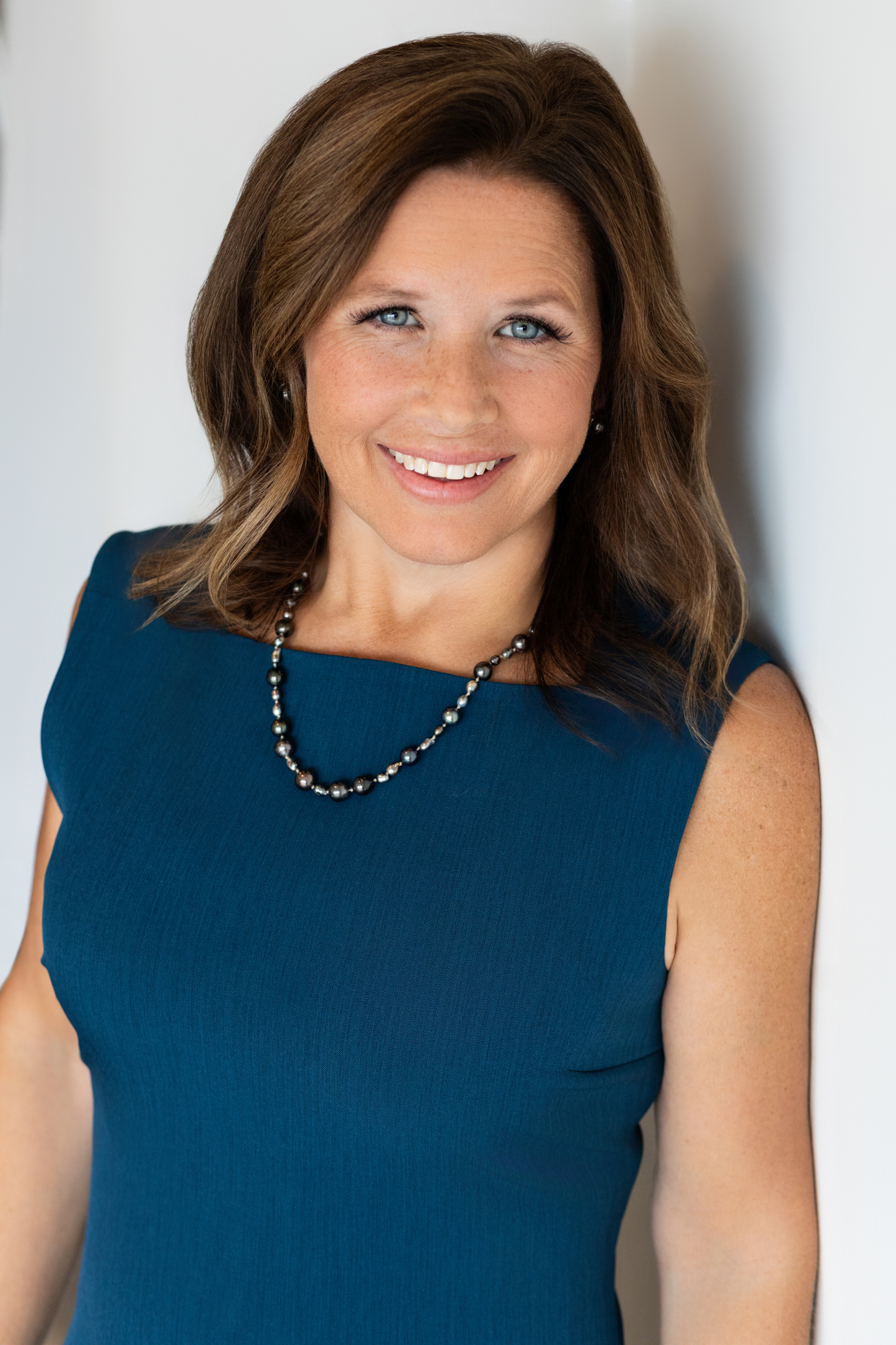
Brooke A. Whitworth (bwhit@sc.edu) (ORCID: 0000-0002-3944-291X) is a Professor at the University of South Carolina, Columbia, SC, in the Department of Teacher Education. She has delivered over 1,400 hours of professional learning and development around the country to thousands of educators. Brooke’s current research investigates the role of district science coordinators and science teacher leaders, how they support teacher change and retention, and work to increase student achievement. As a result of her work, she has developed a broad understanding of the research on teacher change, leadership, professional development, and district effectiveness.