
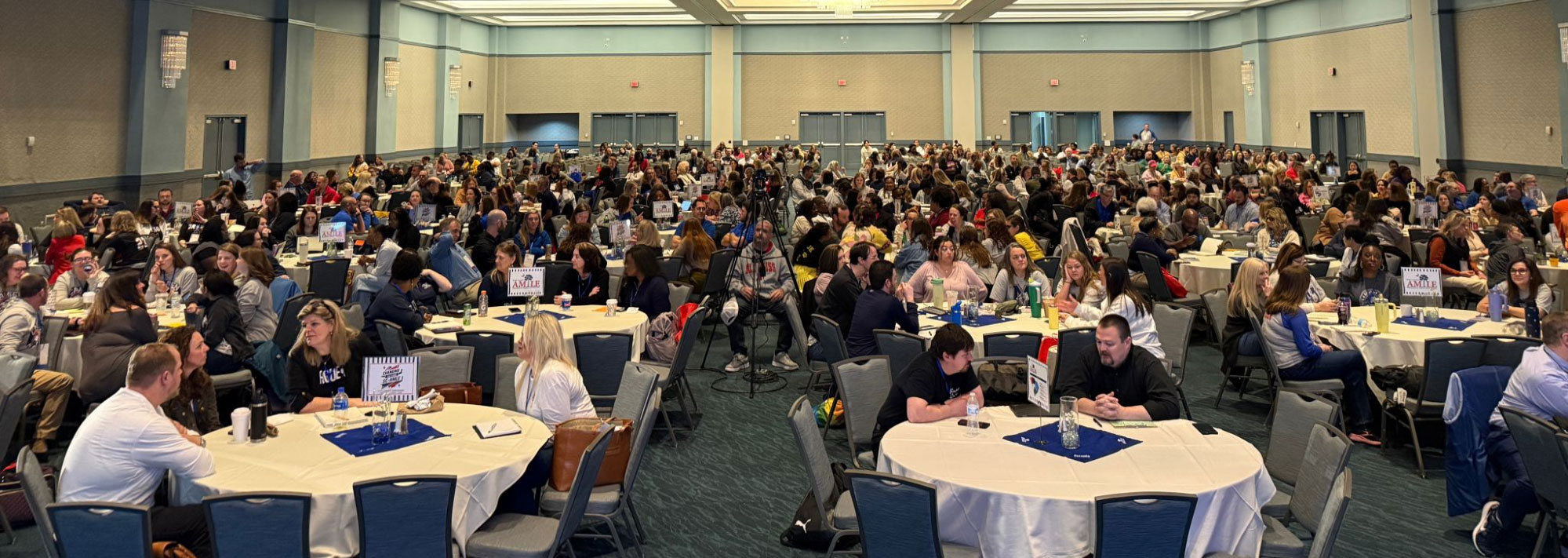
A Room Full of Middle School People
I’m awkward. They’re awkward. It just fits.
That’s what I tell people when they ask why I teach middle school, and I truly mean it completely every time. I knew going into Winthrop University that I wanted a middle-level program specifically. Not something I would adjust or adapt. The real thing. The weird, unpredictable, you-love-me-one-day-and-hate-me-the-next thing that is seventh grade. Sixth grade feels like a slow roller coaster building all year, and eighth grade begins chaotic but settles down. Seventh grade is just constant chaos, and I love it. I love watching students discover who they are in real time, that moment when they still need you, but you can already see who they’re becoming.
About my junior year, one of my professors mentioned a conference. There is a middle-level conference, she said. You can apply for a grant. They will pay for it. You just have to find somewhere to stay.
I was like, okay, that sounds neat.
When I walked in, I found a room full of people who truly love middle schoolers. Not just those who tolerate them or ended up here because elementary jobs were full. These were people who chose this on purpose and were genuinely excited. At other conferences, even good ones, there’s usually a shift toward elementary or high school. You have to spend energy adjusting and translating. But here, for the first time, I didn’t have to do any of that. Every session was already focused on my kids.
I went again before I graduated. I have gone every year I have been teaching. This year was my eighth time. And it has meant a lot to me.
During my senior year, my last internship didn’t go well. I saw teachers being negative about their students, and I started to wonder: if this is what teaching is, I don’t want it. I had spent four years in a program I loved and had chosen middle school on purpose. Yet there I was, standing in a building, doubting if I could really do this.
I went to the middle-level conference that year.
Okay, it’s not all teachers. It’s just this one group. Most middle school teachers aren’t like that. There are plenty of people who love what they do, love their kids, and want to get better for them.
I came back, finished, and have been in a classroom every year since. But it happened again. Two years ago was a really hard year. I had been feeling low since November, and by February, I was not sure I would make it to the end of the school year. I got to March. I got to the conference.
Okay. I can make it to the end of the year.
I tell my students every spring, “I am going to a conference this weekend.” I am coming back on Monday, and I will be so excited that it will feel like the first day of school. They look at me like I have lost my mind. I have a little bit. That is the point. It is perfectly timed, every year, right when I need it.
This year, I presented for the first time.
Eight years of attending. Never presented. My colleagues and I have been using a creative bookmaking strategy in our classrooms this year, and we decided to share it at the conference. I will not pretend I was not nervous. But then someone came up after and said, “This is my plan, this is exactly how I am going to use this.” And I later saw that people had used the templates I shared. Something I had made in my classroom had moved into other classrooms in other schools.
Not only am I a professional. I am starting to become a leader. Not just in my school. In other places where I can share knowledge and help people.
What made it better than I expected was that two of the teachers who taught me in middle school happened to come to my presentation. These are people who remember me from back then, and I genuinely feel bad about that. But standing there and watching them say, ” Look at how much you have grown, look at where you are going and where you are going to continue to go, that landed differently than I anticipated.
That same year, a teammate encouraged me to take on a leadership role at my school. He said: You go to the conference every year, you share everything you learn, you present to colleagues. You are already doing leadership. Why not make it official? I became a seventh-grade team lead this year. And at the conference, without planning, most of the sessions I attended were about leadership development as if the whole thing knew where I was and what I needed next.
I have applied for the grant almost every year I have attended. The application asks one thing: how are you going to share what you learn? And I would share anyway. I always do. The grant just gives the sharing a shape and a deadline, which makes it easier to follow through. I presented to my department the day after I got back this year. People were already asking me: ” How was it? What did you learn? What are you going to do?
If someone asked me to describe the conference in one word, I would say resource. A resource for knowledge. A resource for connection. A resource for the moment in the year when your bucket is running low, and you need someone to remind you why you are here.
Middle school is a more important time in a young person’s development than most people realize. A middle schooler’s brain develops at a rate comparable to that of a newborn’s. And yet it is the level that gets the least targeted support, the least specifically designed professional development, the most eye rolls in the break room. Having a place to go where none of that is present, where the whole room is filled with people who chose this and are glad they did, matters more than I can fully explain.
Next year is year fifty. I cannot wait to see what they do with it.
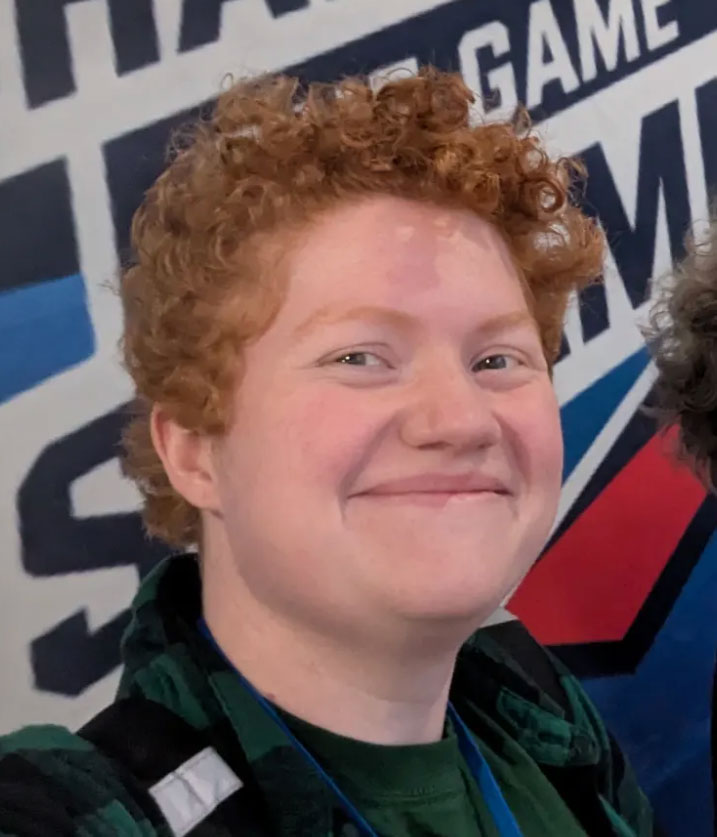
Hannah Tucker is a seventh-grade math teacher in the Greenville County School District and a graduate of Winthrop University’s middle-level program. She is in her sixth year of teaching, her first as a seventh-grade team lead, and has attended the SCAMLE Conference eight times.


We Are Who We Are
In South Carolina, most awards require schools to reach full proficiency. Our school hasn’t reached that mark yet.
That’s not an excuse; it’s just the truth. Our school serves a high-poverty community, and we work hard every day for students who need us. For a long time, there wasn’t anything to show our community, parents, or teachers that said: This school is doing good work. This school is worth believing in.
That’s why we decided to pursue Schools to Watch.
Two years ago, we started considering it. We sent out an informal survey to teachers, then our leadership team sat down and asked ourselves: Is this something we can take on? We felt we were already doing much of what the framework described by reviewing discipline data every month, raising rigor and student engagement, and giving teachers real leadership roles. When I brought the idea to our School Improvement Council parents, they didn’t hesitate.
Their exact words: “We have seen this school grow so much since COVID. This is something we should definitely go for.”
So we went for it. From the start, I told teachers, students, and parents the same thing:
We are true to ourselves. We don’t try to be someone else. We know there are things we can improve, and we also know we’re doing well in other areas. But we have to accept who we are before we can move ahead.
I said that a lot. Because teachers would ask: ” What are we supposed to say when they come to observe us?” And the answer was always the same…The truth. Tell them who we are.
The process gave us a mirror, not one that flatters or criticizes, but one that’s simply honest.
Over the summer, our leadership team and teachers met to review every section. We asked: What are we doing well? What needs improvement? Where can we grow? Those conversations shaped our work plan, which then guided our professional development. Our PD became focused and practical, based on what we actually saw in classrooms, not just generic training.
We do three walkthrough cycles each semester, one day each for math, English, and science. Every teacher receives individual feedback, and each department receives group feedback. In every classroom, we started asking: What’s your learning target today? What are you working on? How do you know if you’ve learned it?
It took time for teachers to adjust, but we improved. By January, we changed our Thursday professional development from passive sessions to planning together: How do we build this into lessons? If someone struggled with small groups, we paired them with an instructional coach or teacher leader and gave them time and a substitute to work through it together.
Don’t hate the data. Embrace the data. Whatever you learn, you have to find out what it is. Then figure out how to address. As a principal, there are times when your feelings get hurt. You put in a lot of effort, but the data shows it didn’t work. That’s tough. But the data tells you something, and if you don’t listen, you can’t make changes. What I’m most proud of is how student voice is starting to grow.t voice.
We know that when students are more involved in their own learning, they learn more. If the teacher does all the leading and students just listen, less learning happens. So this year, we started clubs, like student government, literary magazine, volleyball, football, lacrosse, drama, chorus, and band. We’re just getting started, meeting three times a week for now. Our goal is to meet every day next year.
We’ve also started giving students a real say in things that matter to them.
Earlier this year, I asked the student government, “What would motivate you to do better on your iReady scores?” They discussed it and came back with an answer: If we hit our goal, could we wear pajama bottoms for a week?
I told them, “You hit your goal, you can wear pajama bottoms.”
They reached their goal, and I kept my promise. You would have thought I gave them a million dollars. It’s a great example of what we want to keep building here. What we want to keep building—helping students feel ownership, identity, and that their voice matters here.
We also invited someone from the district to interview students about what’s happening in their classrooms. We use that feedback to guide our goals. They’ll return at the end of the year to do it again, and that will shape our work plan for next year. The Schools to Watch process showed us we needed more student voice, and we’re making that happen.
On math, the numbers are starting to move. Last year, we had low proficiency. Our most recent iReady data projects significant growth. We are doing more small-group and individualized instruction, focusing more on clarity of learning, and using the resources that we have in ways that adapt to each student. Math is about confidence, and when a kid can see their own progress, on their own terms, something shifts.
We already had a strong reading culture, but now we’re deepening it. We’re asking what purposeful reading looks like and building a library with books kids actually want to read, books where they can see themselves and find characters who share their experiences. If a student is in a self-contained class, we want them to find a book with a character like them, not just a mention, but a real character.
None of this shows up on a report card, but it’s real, and it matters.
The Schools to Watch banner on our wall means something to our community. It tells parents, students, and teachers that what’s happening here is worth recognizing, not because we’ve reached the finish line, but because we’re doing the work and growing.
Most awards require scores we don’t have yet. This one looks at everything a school does and says: You’re doing real things, now keep going. For schools like ours, that means a lot.
It’s a great thing for schools like ours to have something to aim for. That’s what the banner represents.
I also say this: The definition of insanity is doing the same thing over and over and expecting different results. The Schools to Watch process won’t let you do that. Every time you renew, you have to show growth. You can’t stay in the same place; you have to keep moving forward.
That’s the culture I want in this building: not perfect, but always growing.
Shannon Flowers, Ph.D., serves as a Work-Based Learning Coordinator for the Darlington County School District, where she works to bridge education and the local workforce. She is deeply passionate about creating opportunities for students, strengthening communities through education and workforce development, and is guided by a strong commitment to faith, family, and Taylor Swift.
The Students Are Ready. Are We? Rethinking Workforce Readiness in Rural South Carolina
Stop me if you’ve heard this one before. “No one wants to work anymore.” What about this? “What are they teaching these kids now? They don’t know anything about the real world.” I hear these sentiments quite a lot in my field of work. As an educator focused on work-readiness and career development, I sit at the intersection of industry expectations and students’ preparedness to meet them. The problem is that there are more layers to these issues than people realize. So often, especially in high-poverty rural communities, there are barriers that prevent the attainment of skills that the workforce hopes to see. I didn’t know it at the time, but I think I may have been built over time to uniquely identify with both.
My brother and I were raised in rural South Carolina by my grandmother with a very limited income. I lived in a big house, so people didn’t realize the limitations we faced and the inability to attain the things that others had. Beyond the emotional toll was the realization that I had to work for the things I wanted. I was fortunate to have people in my life who helped me with those things. From beginning to work at 14, to dropping out of college when I got married at 19 and divorced at 27, going back to school to get not only a Bachelor’s degree but also a Ph.D., there were people in my life who interceded. There were times I didn’t have transportation to get to school or work, and someone stepped in to assist me. There were times, as a single mom, when I had to choose between gas for my car to get to work and keeping the lights on, and someone helped. There were also times, though, when I wanted to give up or made choices with consequences that could have been much worse. As I look back at my life and the beauty of where I am now, I know I would never have reached this point without the mentoring and support of the people in my life. While this story is wholly mine, it is not unique, as many students and their families face such challenges daily.
Now that I am a Work-Based Learning Coordinator tasked with finding internship opportunities for high school students, I see so much of myself in some of them. When people say no one wants to work anymore my first thought is that I have 74 student interns who want to go to work today, and I can’t find enough people to work with them all. And is it that the people you want to work with have no desire to work, or have the circumstances of their life put them in a position where they do not have the means to work? Is transportation a barrier, or are they struggling to eat and have clothing? Or do they just need the right people to take notice and give them the opportunity to learn?
While internships are reciprocal relationships that can meet an organization’s needs and provide real-world experience for students, they are still learning experiences, and most will not equip students with the skill set to perform as a seasoned professional would. When I first came into my role, I was naive to the fact that those complaining about the workforce could also be unwilling to provide opportunities for students. Yet, with the right supports and partnerships in place, I have seen great success for some of these students.
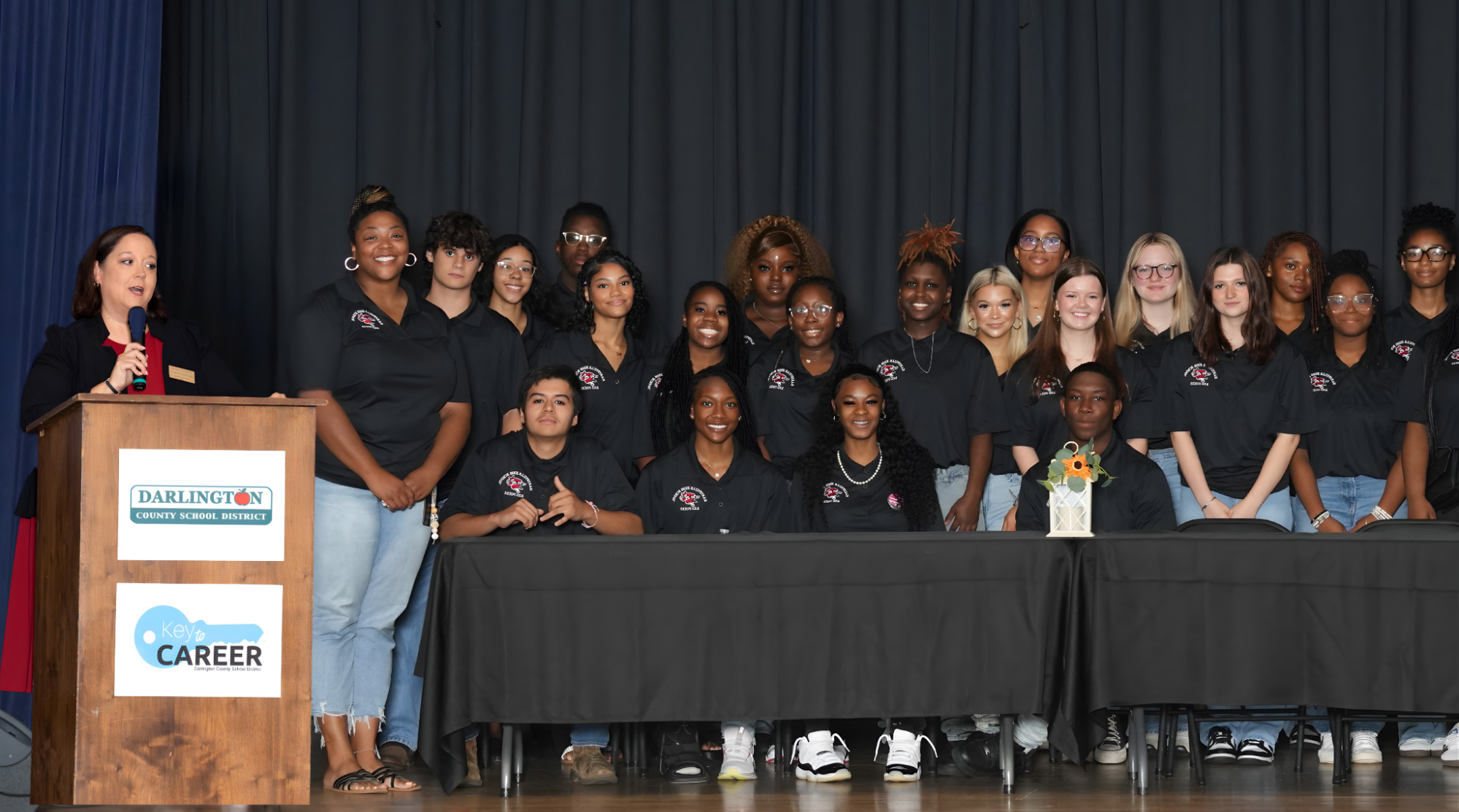
I was hired four years ago to manage the Key to Career Internship Program that began with 18 students and has expanded to 159 in the past year. These students are strategically placed in courses to help build essential life skills, such as communication, collaboration, and time management. Many of these students will need to unlearn behaviors that counter those skills, and it does not occur overnight. With my very first cohort of students in the spring of 2022, I began to realize not only that reality but also that the students I needed to help find internship experiences faced barriers beyond the classroom.
One of my first interns had a placement aligned with her career goals, but her family had only one vehicle, and her dad used it to get to work. Transportation is a major issue for many students, and we were able to work through it, but it wasn’t the only issue. Her internship mentor noticed the condition of her clothing and paid for her to buy two suits she could wear on specific days. He never asked whether she needed the clothing; instead, he told her that, since she was his employee, he needed to provide her with a “uniform,” and she never realized he was assisting her because of her needs. When she received her first paycheck, she proudly told me she was able to turn the power back on at her home, after they had been living without lights or heat for months. At the end of her internship, her mentor gave her a $500 scholarship to help purchase college books – in addition to the $ 10-per-hour salary she earned. This student is currently finishing up her senior year of college with skills and abilities she would not have had if her mentor had not been willing not only to open the doors of his organization for her, but also to see and help meet her needs.
Similar to my story, her story is unfortunately not unique, either. I have had a student intern who was involved in gang activity, who worked for a fire department, and is now in the military. I have had a student intern who went from being on the verge of an attendance plan to showing up every day at school and work, even if he had to walk. I have also had internship students who worked two jobs or slept on friends’ couches because they did not have a home. These were all students who wanted to work but, without assistance, could not.I recognize the needs of others because of the needs that I have encountered. I also recognize the privilege I have because others stepped in to help me. To truly build a workforce pipeline, we need to go beyond opening doors and open our eyes to the problems students face every day, asking how we can help alleviate them. It is not enough to say what we want the future workforce to look like; we need to put in the work to help it happen. True success comes from investing in people, and the earlier we begin, the better.
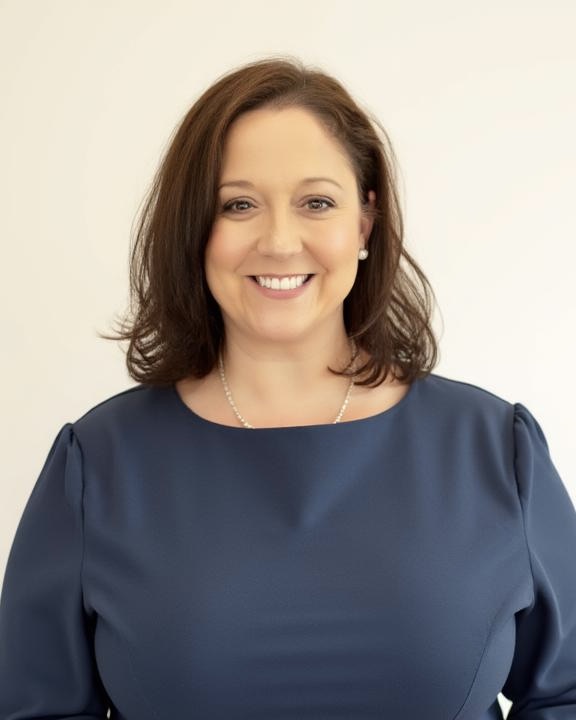
Shannon Flowers, Ph.D., serves as a Work-Based Learning Coordinator for the Darlington County School District, where she works to bridge education and the local workforce. She is deeply passionate about creating opportunities for students, strengthening communities through education and workforce development, and is guided by a strong commitment to faith, family, and Taylor Swift.
I Am, Because You Are: Building Belonging for Educators Far From Home
There is a well-known African proverb that teaches, “A person is a person because of other people.” Often expressed as Ubuntu—“I am, because you are”—this truth reminds us that our humanity is shaped through our relationships with one another. When a community is healthy, engaged, and united in purpose, it becomes a source of strength—lifting us in moments of exhaustion and renewing hope in times of disillusionment. Together, we grow stronger and go farther than we ever could alone.
Consider the scope of this work for a moment. I have the privilege of supporting a community of 60 international educators from across the globe, each serving students in classrooms across 32 school sites in Greenville County, South Carolina. Our district educates more than 77,000 students from K4 through grade 12. In the spirit of Ubuntu—“I am, because we are”—this work is rooted in relationship and shared responsibility. While I am one person, my work is made meaningful through the collective strength of this community. Each day, I serve alongside others so that every educator feels seen and supported, and every student has the opportunity to thrive.
At first glance, our team members appear to have little in common. They come from different geographies, carrying regionally rooted foods, dialects, and traditions—each layered with meanings known most deeply by family and community. The threads of their traditional garments are as distinct as the journeys that brought them here. For many, life “back home” continues in parallel time zones, where floods, typhoons, political unrest, and the loss of loved ones unfold as distant notifications on their social media accounts. Yet even across oceans, these experiences remain woven into who they are, reminding us that no one arrives untouched by the lives they leave behind.
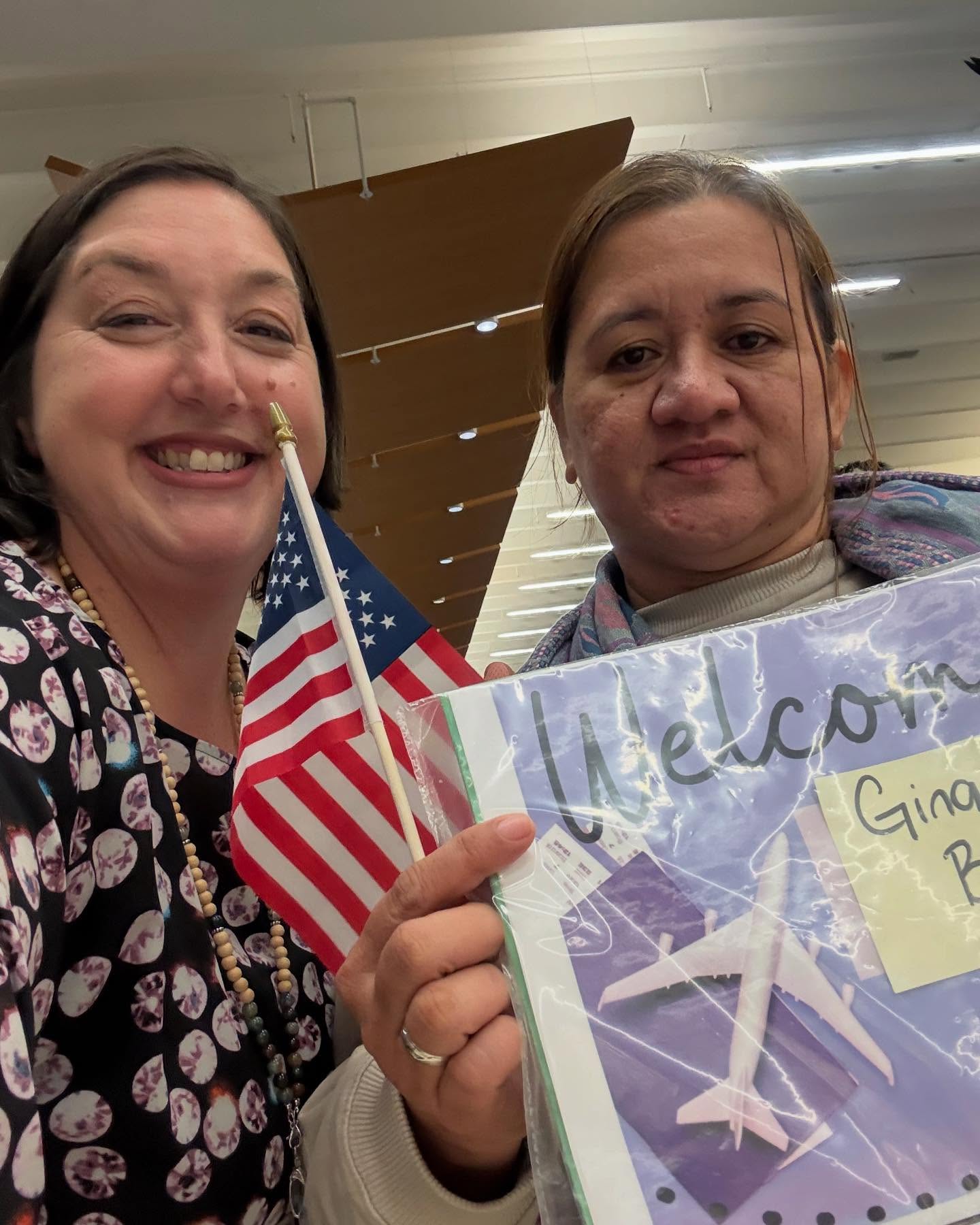
What unites this community is a shared moment of arrival in Greenville. As they step onto the escalator toward baggage claim, palms slightly damp with anticipation, their eyes search for a familiar sign of welcome. At the bottom, I stand holding a sign bearing a logo they recognize and their name written in bold black marker, an American flag in my other hand. In that moment, Ubuntu becomes visible. Relief, tears, and smiles meet my gaze—not because I am the destination, but because I represent belonging. This is the first affirmation that they are not alone—that their brave journey has grown the circle and deepened the ties that connect us all.
From that moment forward, time begins to move differently. The five-year visa clock starts its quiet countdown as classrooms are arranged, desks positioned, and linens placed on beds that will offer rest in an unfamiliar land. These acts—small but deeply human—carry the weight of transition. They both stir and steady the emotions that shape the cultural exchange experience. In the spirit of Ubuntu, this work is not merely about relocation or instruction; it is about living, learning, and becoming together—recognizing that each individual’s success is bound to the care, presence, and shared responsibility of the whole.
Ubuntu demonstrates its pervasive relevance every day in a million tiny ways. Through advocacy, celebration, professional support, and even shared mourning and discontent, I am, because we are. The unity of our purpose, the high quality of our professional insights, and our personal resilience as individuals and as a collective inspire us. May we continue to walk forward together, leading, supporting, and growing side by side.
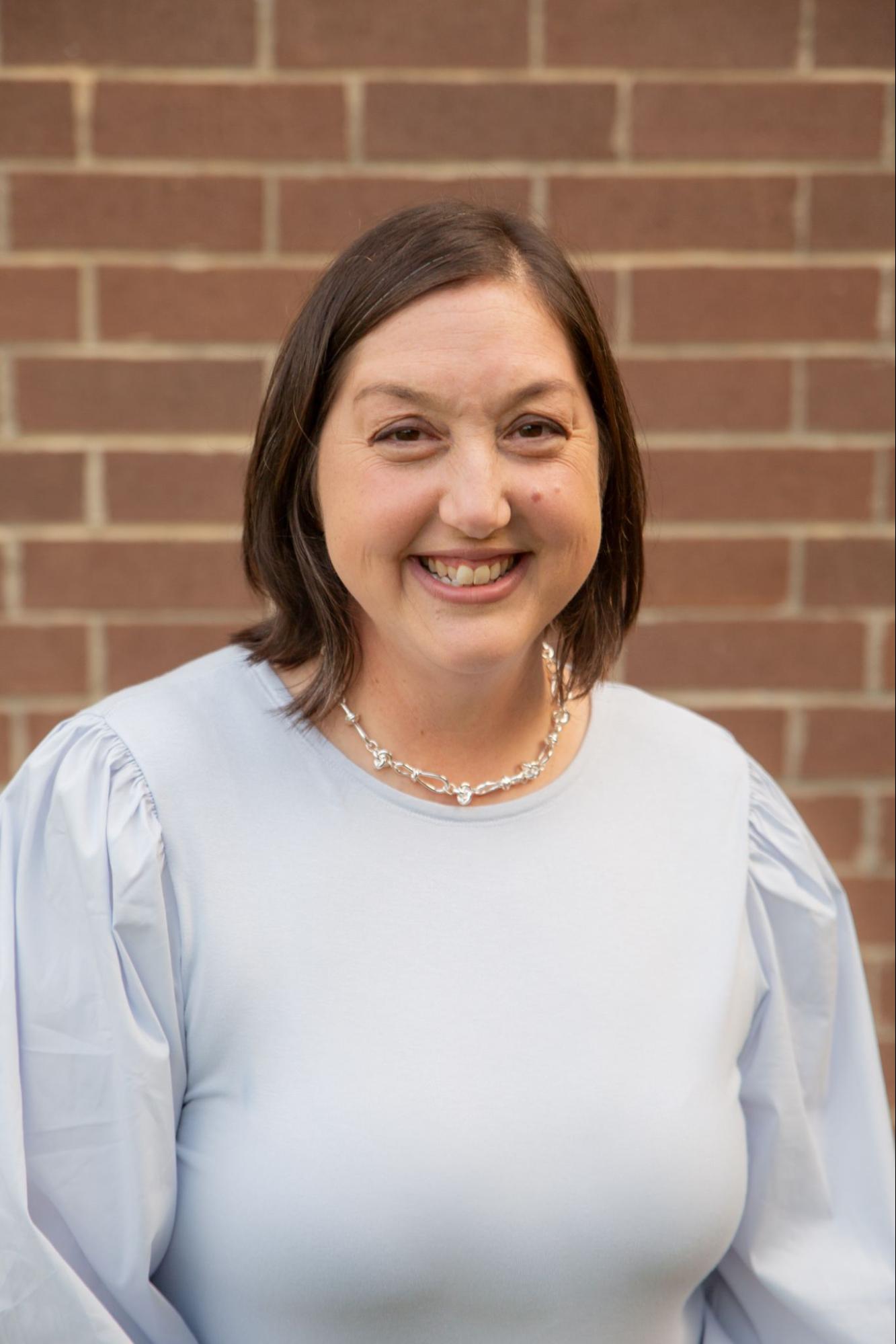
Sarah Evanson-Atkinson is Greenville County Schools’ International Teacher Coach who brings curiosity, empathy, and a global perspective to every classroom she supports. She loves helping educators unlock their full potential while celebrating the unique journeys that each teacher brings to the learning community.
The Stories We Ask Others to Tell
There is a moment in every writing retreat that I have learned to recognize.
It comes just before someone reads aloud at a writing conference with me. The eyes don’t make eye contact. The throat clears. Almost always, the preface arrives before the story does: This probably isn’t very good. Or, I don’t really write. Or, I’m not sure this is what you were looking for.
By the time the words are spoken, the apology has already taken up space in the room.
I have heard this from students, veteran teachers, first-year educators, principals, and instructional coaches. No matter how many times we name it or how many times we say that writing is communal or that perfection is not the point, the instinct to minimize oneself arrives early and uninvited.
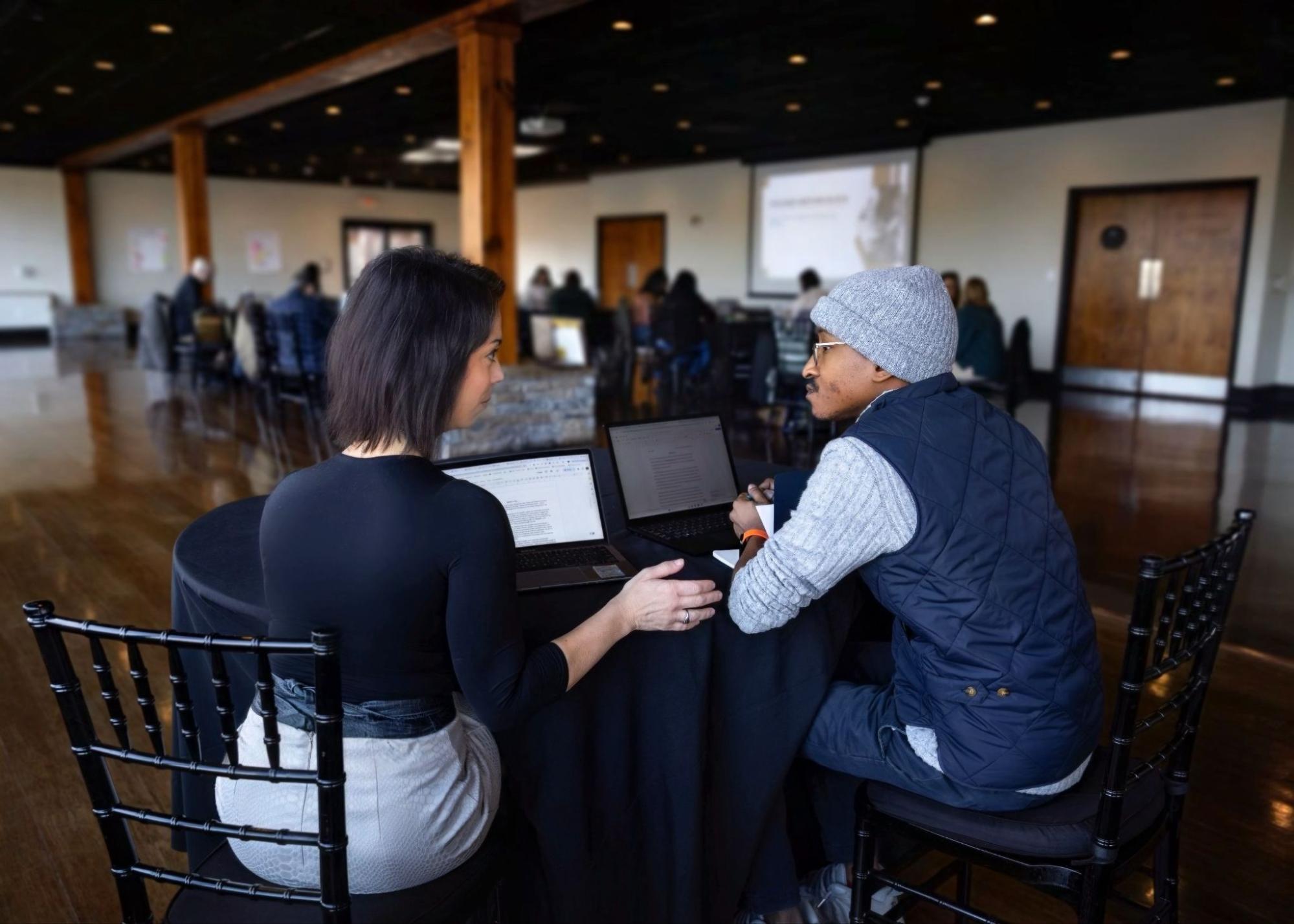
When I first began facilitating narrative spaces, I approached the work the way I had learned to approach writing as a middle school English teacher. My instinct was to remove barriers. To reassure. To encourage. To tell people, truthfully, that what they had to say mattered.
That instinct still lives in me. What I did not understand for quite a long time was how much power sat quietly inside that reassurance. In the classroom, encouragement is a tool for growth. In institutional spaces, it becomes something else. It shapes what feels safe to say. It signals what kind of story belongs. It suggests, often unintentionally, what will be valued once the writing leaves the room.
Because I am not just holding space. I am shaping it.
I choose the prompts. I frame the purpose. I explain what a “field narrative” is and what it might do once it travels beyond the table where it was written. I help determine whether a story is ready to be shared publicly, revised privately, or held back altogether. Even when I say, This is for you, the structure surrounding the writing suggests otherwise.
The habits I carried with me from the classroom, scaffolding, modeling, and guiding, did not disappear when I moved into facilitation. They scaled. And with that scale came a different kind of responsibility, one I had not yet fully named.
There is an invisible curriculum in narrative work, and I am one of its instructors. Over time, I began to notice the kinds of stories that surfaced most easily. Stories of perseverance. Stories of growth. Stories that bent toward hope, even when they began in pain. I noticed which drafts participants hesitated to read aloud, and which ones drew nods of recognition from the group. I noticed which stories people asked me about later: Is this okay to share? Should I take this part out?
Those questions lingered with me longer than the stories themselves. Because embedded in them was a deeper uncertainty: Who is this story for? And just beneath that: What are the consequences of telling it honestly?
There are stories I encourage people to write, and stories I quietly hope they don’t.
Not because they are unimportant. But because I know the systems they move through. I know how easily a story can be misunderstood, flattened, or repurposed once it leaves the care of its author. I know that vulnerability, when removed from context, can become evidence against the very people who offered it in good faith.
This is the ethical tension at the heart of narrative work in education, especially when it is housed inside institutions. We invite educators to bring their full selves to the page, but we cannot always guarantee what will happen to those selves once the story circulates. We say your voice matters while working within systems that have long ignored, disciplined, or extracted voice. We celebrate authenticity, but often only the versions that are legible, productive, or palatable to those in power.
I sit with this contradiction constantly.
As an intermediary, positioned between schools and systems, between lived experience and policy discourse, I am close enough to hear the stories people do not publish. I am trusted with moments that never appear in reports or presentations. I carry narratives that shape my understanding of what schools need, even when those narratives cannot be cited, quoted, or shared.
This proximity is a privilege. It is also a responsibility. Because storytelling is not neutral. The act of inviting someone to write already assumes that their experience can be translated into meaning, that it can serve a purpose beyond itself. When we create narrative spaces, we are not just asking what happened? We are asking what kind of knowledge counts. And, implicitly, what kind of story will move the room?
I have learned to listen for what is missing as much as what is said.
Sometimes the absence is protective. Sometimes it is imposed. Sometimes it signals a boundary the writer is not ready, or not willing, to cross. My role is not to push past that boundary. My role is to recognize it, respect it, and consider what it reveals about the conditions under which educators are being asked to speak.
In recent years, I have changed how I facilitate these spaces. I speak less about courage and more about consent. I talk openly about the audience and the afterlife. I name that not every story needs to be shared publicly to be meaningful. I remind participants that withholding can be an act of wisdom rather than fear.
The truth is, some of the most important stories resist resolution. They sit in tension. They raise questions without answering them. They make us uncomfortable, not because they are poorly told, but because they reveal the limits of the systems we operate within.
Those stories are harder to hold. They require restraint. They ask more of the listener than the teller. I am still learning how to sit with that. I am still learning how to be honest about the power I carry in these rooms, and how to use it with care. I am still learning how to invite others into narrative work without assuming ownership over what they produce. I am still learning when to step forward and when to step back.
What I know now is this: asking someone to tell their story is never a small thing. It is an invitation that comes with weight, whether we acknowledge it or not.
If we are going to continue this work, if we are going to ask educators to write themselves into a field that has too often been written over them, then we must be willing to interrogate the structures we build around their voices. Not to silence them. But to ensure that when they speak, they are not standing alone.
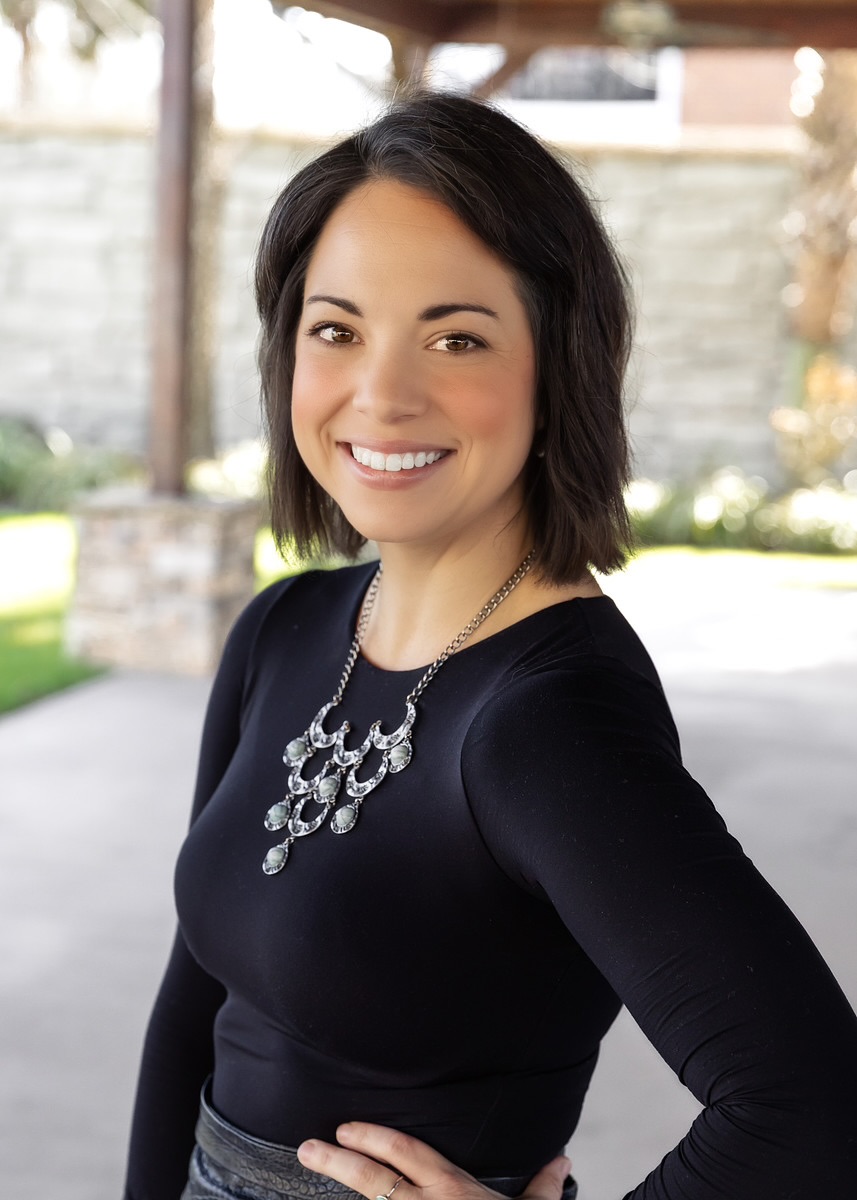
Lesley Snyder is the Associate Director of the Center for Educational Partnerships at the University of South Carolina, where she works alongside educators, districts, and communities across South Carolina. A former middle school English teacher, she centers her work on narrative inquiry, partnership ethics, and the human dimensions of educational systems. She writes about voice, power, and what it means to hold stories with care.
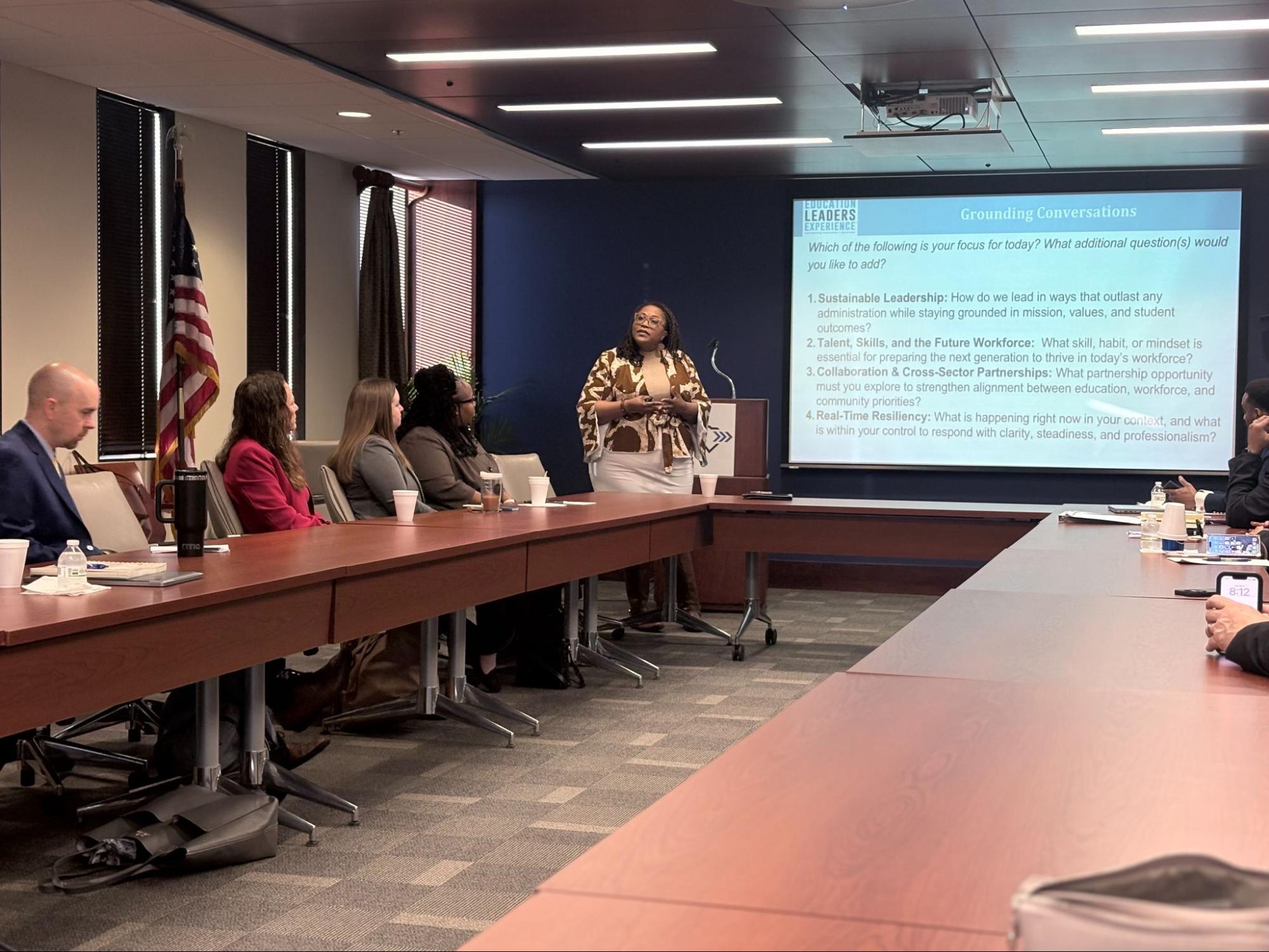
ELE: Verbalizing Visions through Experiential Leadership
“I have always thought of myself as a teacher the way other people of think of themselves as gardeners, painters, composers, mathematicians, and poets. I am a craftsperson of learning…”
(Kohl, 1998, pg. 10). Before the titles, before the credentials, before the organizations, teaching was the throughline. As a scholar and scientist, I was trained to ask precise questions, to honor evidence, and to respect the discipline required to move from curiosity to clarity. As an educator, I learned early that knowledge alone does not change outcomes. Context matters. Systems matter. Relationships matter.
My early work in a genetics laboratory sharpened my analytical lens. It taught me how complex systems behave, how variables interact, and how small shifts can produce outsized effects. However, it was my early years in secondary education that initially caused my calling to stretch. I did not want to simply teach in schools. I wanted to change the business of school. I wanted to understand why sound ideas stalled at implementation, why policy so often felt disconnected from classroom realities, and why educators were frequently positioned as recipients of decisions rather than contributors to them.
That curiosity carried me beyond the classroom and into the broader education ecosystem. My work within state education systems exposed me to how policy is interpreted, operationalized, and constrained at scale. My leadership in higher education, particularly in assessment and accreditation, deepened my understanding of accountability, quality assurance, and the invisible structures that shape educator preparation and professional learning. Moving across these spaces—from the classroom, to the lab, to state systems, to higher education, gave me a panoramic view of education as an interconnected system rather than a collection of isolated roles.
Just as important, it gave me perspective and relationships. I learned how decisions are made, who holds influence, where data is leveraged well, and where it is misunderstood or misused. I saw the distance between intent and impact, and the cost of that distance to students, educators, and communities. Verbalizing Visions LLC emerged from that lived tension.
The capacity of Verbalizing Visions is inseparable from my background as a scientist, scholar, educator, and entrepreneur. We are built to translate research into action, policy into practice, and ideas into systems that can actually sustain them. Our work integrates inquiry, experiential learning design, reflective leadership development, and strategic facilitation. We operate across sectors because we understand their languages…and their limitations. At our core, we help leaders make meaning, build alignment, and move with intention within complex systems.
This foundation has shaped my leadership within the Education Leaders Experience (ELE), a ten-month professional learning experience for K-12 higher education leaders. I entered ELE in its fourth year as a lead facilitator and internal evaluator at a pivotal moment in its evolution. My role was not to create the experience, but to help deepen it—strengthening its coherence, sharpening its learning design, and grounding it more intentionally in reflection, systems thinking, and lived policy context all within a fully virtual environment. This was during Spring 2020 when in-person convening were impossible and leaders were navigating the COVID-19 pandemic in real time. Designing for connection, inquiry, and trust in that moment required ELE to become more deliberative, more reflective, and more aligned with the realities leaders were facing. That inflection point marked a shift from adaption to intentionality, position ELE to mature into a decade-long effort, now in its tenth year, with a clearer theory of impact and a stronger alignment between purpose, practice, and participant experience.
Through the collaborative leadership among Colonial Life, the Center for Educational Partnerships, regional workforce advisors from the SC Department of Employment and Workforce, and Verbalizing Visions, ELE has functioned as a living learning system. Rather than operating as a fixed program, ELE is intentionally designed to evolve in response to the needs, questions, and realities leaders bring into the space. Participants engage in experiential learning grounded in authentic contexts that expand their understanding of education within broader workforce and community ecosystems, helping leaders see connections and opportunities often obscured by role-specific silos.
Reflection serves as a core leadership practice within ELE. Structured reflection is embedded throughout the experience to support sense-making, adaptive thinking, and alignment between values and action. Participants examine how their identities, experiences, and environments shape how they lead, particularly during moments of uncertainty and change. This reflective practice becomes a tool leaders carry back into their organizations, strengthening decision-making and leadership coherence over time.
Impact statements from ELE participants demonstrate consistent and meaningful shifts in leadership perspective, practice, and intent. Across cohorts, leaders describe expanded awareness of how education connects to community, workforce, and local economies, with repeated emphasis on purpose, resilience, adaptability, and people-centered leadership. Site-based experiences with farms, small businesses, cultural institutions, manufacturing, libraries, and corporations surfaced the value of mission-driven work, ethical decision-making, and community over competition. Many participants noted a renewed commitment to preparing students for multiple postsecondary pathways, including careers and trades, and a clearer understanding of how real-world skills such as problem-solving, collaboration, and adaptability align with local workforce needs.
Participants also reported changes in how they understand and enact leadership. Reflections frequently referenced increased confidence, clarity of purpose, and a shift away from position-based authority toward influence grounded in relationships, listening, and trust. Leaders described becoming more intentional about partnership-building, communication, and stakeholder engagement, as well as more reflective about how identity, values, and lived experience shape decision-making. Several noted concrete changes to their practice, including rethinking work-based learning design, strengthening community partnerships, refining communication structures, and fostering team cultures centered on respect, belonging, and shared responsibility.
Collectively, these impact statements indicate that ELE strengthens individual leadership capacity while also contributing to a broader culture of connected, purpose-driven leadership. Participants consistently articulated a deeper sense of responsibility to serve students, colleagues, and communities with intention, adaptability, and integrity. The experience not only broadened perspectives, but also reinforced a shared commitment to leadership that values people, builds resilience, and leverages community assets to create meaningful and sustainable impact.
At its core, my call to teach has always been a call to reach beyond classrooms, beyond roles, and beyond inherited ways of doing school. Verbalizing Visions LLC is where that calling takes form as leadership development grounded in clarity, connection, and systems awareness. For me, leadership is teaching at scale, creating conditions where people can see systems more clearly, make meaning together, and move within them more wisely. My leadership in the Education Leaders Experience reflects this work by stewarding spaces for learning, reflection, inquiry, and relationship. ELE is one way Verbalizing Visions shows up in the field, reaching leaders where they are, honoring what they carry, and equipping them to shape what comes next with clarity, courage, and care.
References
Kohl, H. (1998). The Discipline of Hope. New York, New York: Simon & Schuster
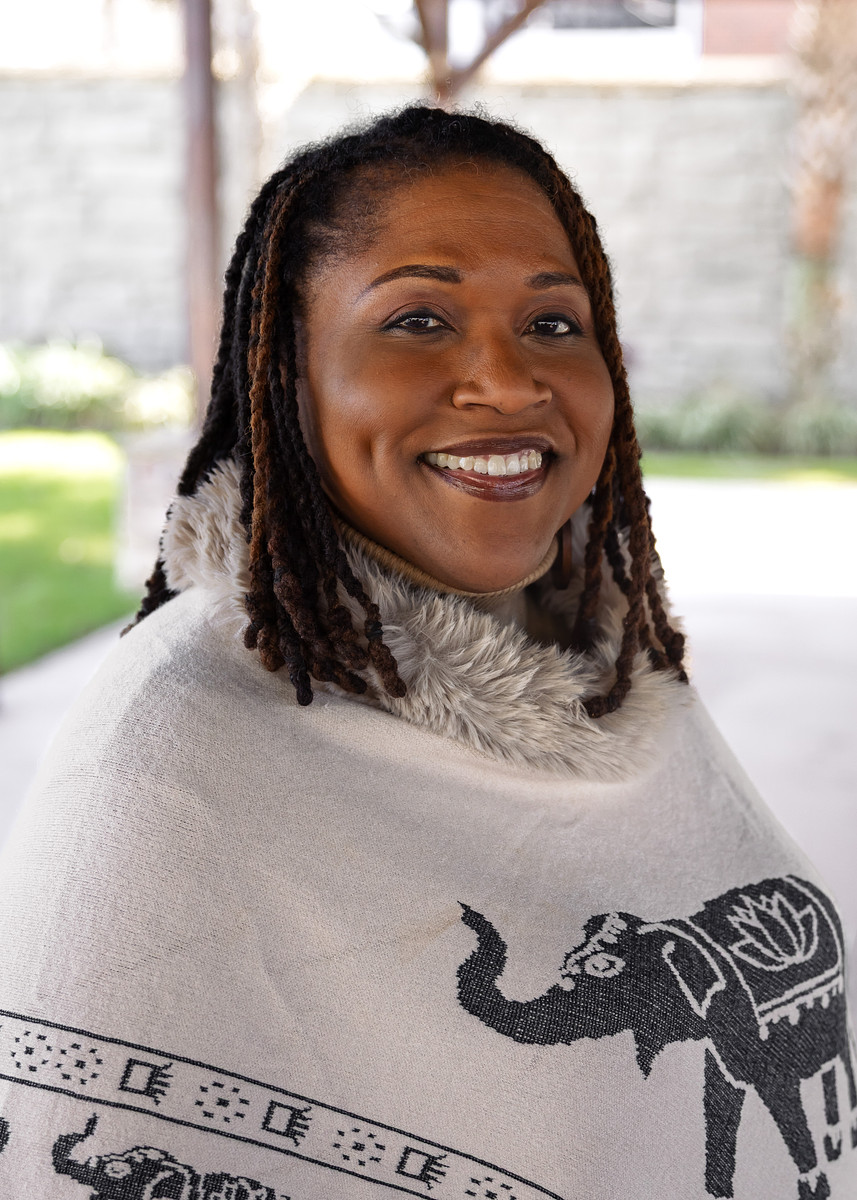
Dr. Regina Ciphrah is a scholar, scientist, and educator who serves as CEO of Verbalizing Visions LLC. With experience spanning the genetics lab, secondary classrooms, state education systems, and higher education, she designs leadership experiences that connect reflection, systems thinking, and real-world impact. A proud Gullah woman from Georgetown, South Carolina, she brings curiosity, care, and community into everything she builds.
Finding My Path So Students Can Find Theirs
I have always believed that education is one of the most powerful tools for shaping a meaningful life. Long before I became a Certified Career Services Provider, I was a curious student with big dreams and a desire to make a difference. Even when I didn’t yet have the language for “career readiness” or “workforce pathways,” I was quietly searching for where I belonged and how I could contribute. That journey, which was full of discovery, detours, and growth, ultimately led me to the work I am so passionate about today.
As a student in K–12, and even in college, the opportunities for structured career exploration were limited. In elementary school, career days meant dressing up for an occupation, but not truly learning about what those jobs involved or how someone got there. In high school, I attended classes at our career center, but they didn’t always align with my long-term goals. I chose courses based on interest and enjoyment, not yet realizing how much those choices could shape my future.
I entered college knowing I was college-bound and believing I wanted to be an elementary school teacher. Once I began my coursework, however, I realized there were many more possibilities I wanted to explore. That curiosity led me to change my major to business. While I gained valuable knowledge, I still wasn’t entirely sure where that degree would take me. I completed an internship, but I didn’t yet understand how powerful multiple, targeted internships could be in helping me discover different career paths within the business world.
After graduating with a bachelor’s degree in business, I faced a challenging job market. Like many new graduates, I realized that experience mattered just as much as education. Wanting to strengthen my qualifications, I pursued a master’s degree. This allowed me to apply my business skills in several professional roles, and along the way, my passion for education continued to grow.
Eventually, I returned to school to pursue a master’s degree in education. While balancing work and classes, I learned that student teaching would require me to leave my job. Financially, that was not possible at the time, and I had to step away from completing the degree. Although that was a difficult decision, it led me to a meaningful alternative of working in education in a role that did not require teacher certification but still allowed me to serve students.
Today, I work in career development, a role that beautifully blends my background in business with my passion for education. I support students as they explore career options, connect with employers, and prepare for life after high school. In many ways, my own journey allows me to better understand their questions, uncertainties, and dreams.
Because my own path took time to take shape, I know how important early and intentional career exploration can be. I used college as my time to figure things out, when that discovery could have started much earlier. Now, working in K-12 education, I see firsthand how powerful it is when students are given opportunities to explore careers in elementary, middle, and high school. Schools today are being far more intentional about helping students understand what is possible and how to get there. K-12 schools today are far more intentional about exposing students to what is possible, using career speakers, career-focused events, exploratory courses, college and career fairs, and partnerships with community organizations, colleges, and employers to connect learning beyond the classroom.
These opportunities give students a true advantage. They allow young people to make informed decisions about their education, build confidence in their goals, and step into the future with purpose. My journey may not have been a straight line, but it led me exactly where I needed to be: helping the next generation find their way sooner, with clarity, confidence, and hope.
Rebecca Dhanarine is an education and workforce leader who currently serves as the GEAR UP SC Regional Coordinator for Greenville County Schools, with prior experience in higher education, career development, and community-based organizations. She has a strong track record of building programs, mentoring diverse learners, and organizing impactful initiatives across the region. Deeply committed to her community, Rebecca has served in numerous leadership roles and boards and now leads Youth Leadership Greenville while continuing to support students’ pathways to college and careers.
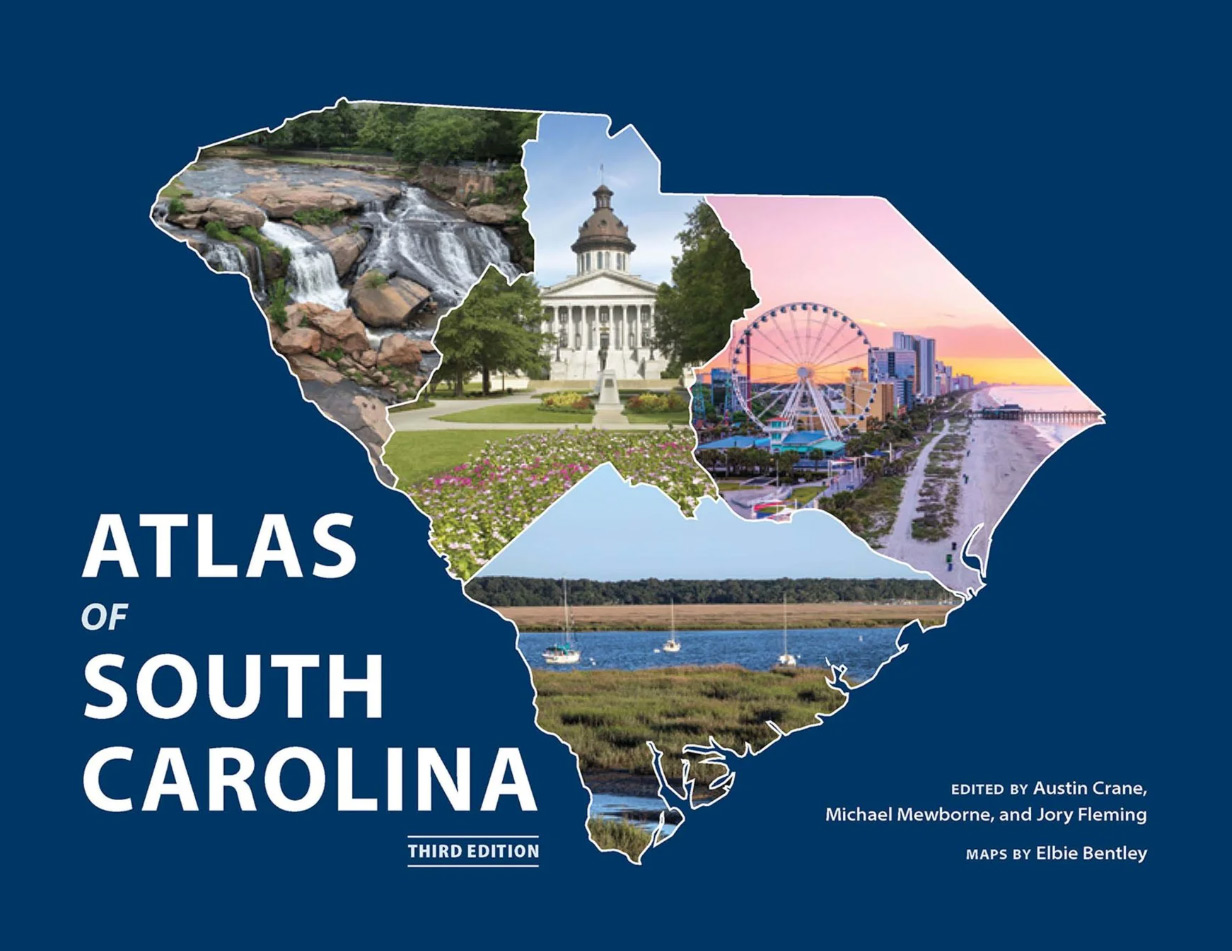
Place Making: Updating the Atlas of South Carolina
Growing up in South Carolina, my first experience with geography in the classroom was learning about our state’s landform regions. These six regions, ranging from the Coastal Zone and Outer Coastal Plain to the Piedmont and Blue Ridge, gave me a way to organize and make sense of all the places around me. I knew that I lived in the Sandhills because of the sandy soil and abundance of pine trees; we passed through vast flat fields of cotton, corn, or soybeans to visit my grandmother in the Inner Coastal Plain; and family trips to the beach allowed me to smell the salty air near the marshes of the Coastal Zone. I could name and group the types of places I had (and would) experience.
When I learned to teach, I struggled with geography. Yi-Fu Tuan (1991) says that geography is the study of the earth as home to people. But how do you teach that? While these landform regions remained, I struggled to find an effective strategy to teach grouping similar places into regions and to explain why this mattered. When teaching world geography, are local landform regions and geographies any longer relevant?
Teaching Advanced Placement Human Geography pushed me to find support from groups like the SC Geographic Alliance. I attended workshops and summer institutes and read recommended books and articles, which challenged me to think like a geographer. I had to think about space and distances, the movement of people and ideas from one location to another, and how physical and human characteristics blend to help us define “places.” Using these skills – these ways of thinking – helped ignite and direct my curiosity about the world. I could then create a classroom where we would work to wonder about the world and learn more about it through maps, spatial thinking, and consideration of human-environment interactions.
When I joined the staff of the SC Geographic Alliance, one of my first big tasks was to help identify a geographer to work on the updates to the Atlas of South Carolina. This resource has helped me as a teacher by consolidating the information I learned as a student and building on it. Not only were there landform regions, but there were geographic regions, and even barbecue regions – different parts of the state where different barbecue sauces were dominant! Many of my students had moved to the state from other parts of the world, including Michigan and Malaysia. The Atlas introduced them to their new home while also giving them examples of how to organize and consider the world through a spatial lens. Updating this atlas based on new census data, events such as earthquakes or hurricanes, and teacher feedback would help our new editorial team continue the legacy of this resource.
The editorial team grew to include our chief editor, Dr. Austin Crane, our colleague, a climate scientist and Rhodes Scholar, Jory Flemming, and me. We partnered with cartographer Elbie Bentley, who had worked on the previous edition and leaned on the research of geographers, historians, scientists, and residents across South Carolina to update this resource and ensure its continued impact in classrooms across the state. We focused on the current state social studies standards to include meaningful content and provide opportunities for inquiry, allowing students to practice their geography skills and learn more about the state.
Each page varied in needs. The page indicates the location of South Carolina relative to the United States, including latitude and longitude? Easy. Creating a new page that describes the military landscape of the state? That took thought. What metrics would we use? What data was best communicated spatially? Were there distributions and patterns that were significant? What colors or symbols would we use to communicate all of this? Was the text approachable to students at multiple reading levels? Where could we add pictures or graphs?
Social studies standards were helpful for identifying content, both for narrowing down our state’s broad history and geography and for ensuring that the atlas would remain a relevant classroom resource. For example, a newly requested page dedicated to the Civil Rights Era identified sites associated with events explicitly mentioned in the 2019 standards, including the Orangeburg Massacre and the Briggs v. Elliott court case. Other pages, like the map of college football conferences, had no specific standard attached, but were kept because they were engaging sources of student inquiry, facilitating the use of geography skills to help students understand how places are connected to (and distinct from) other places.
As editors, we recognized that limited space on the page would limit the stories we could tell. When it comes to cartography, Mark Monmonier (2018) notes that the “fog of detail” must be avoided. Too much information clouds the page, so the mapmaker must choose what to omit to preserve particular stories. We worked to include more maps to tell more stories and share more experiences from South Carolina. Ultimately, space on the page and on the pages of the atlas prevailed. Knowing this, we leave readers on the final page with a call to action, asking students to consider places and parts of the state they can map, using the atlas’s content and even the maps themselves as inspiration. Geography is a way to empower our students to understand the world and tell their own stories of it, to highlight the places that are meaningful to them, and to wrestle – as we had – with the process of mapmaking.
South Carolina’s geography is bigger than the names and descriptions of its landform regions. Understanding geography, including landform regions, helps students to understand the world around them, including their local environment and extending to the entire globe, to people and places, and homes everywhere. As geographers, educators, and South Carolinians, we hope that the third edition of the Atlas of South Carolina will help teachers and students find and understand meaningful content about the state and create opportunities to ask and answer questions about the places we call home.
The Atlas of South Carolina is available from the University of South Carolina Press, either for purchase or as a free open educational resource online.
References:
Crane, A., Mewborne, M., & Fleming, J. (2025). Atlas of South Carolina, 3rd ed. University of South Carolina Press, Columbia, SC. https://uscpress.com/Atlas-of-South-Carolina-third-edition
Monmonier, M. (2018). How to Lie with Maps, 3rd ed. University of Chicago Press, Chicago, IL. https://press.uchicago.edu/ucp/books/book/chicago/H/bo27400568.html
Tuan, Y.-F. (1991). A View of Geography. Geographical Review, 81(1), 99–107. https://doi.org/10.2307/215179

Michael Mewborne is a research associate in the Geography Department at the University of South Carolina where he studies geography education. As director of the South Carolina Geographic Alliance, he works with educators across the state to promote geography education through training sessions, the curation and creation of materials, and the facilitation of professional networks to connect educators and geographers.
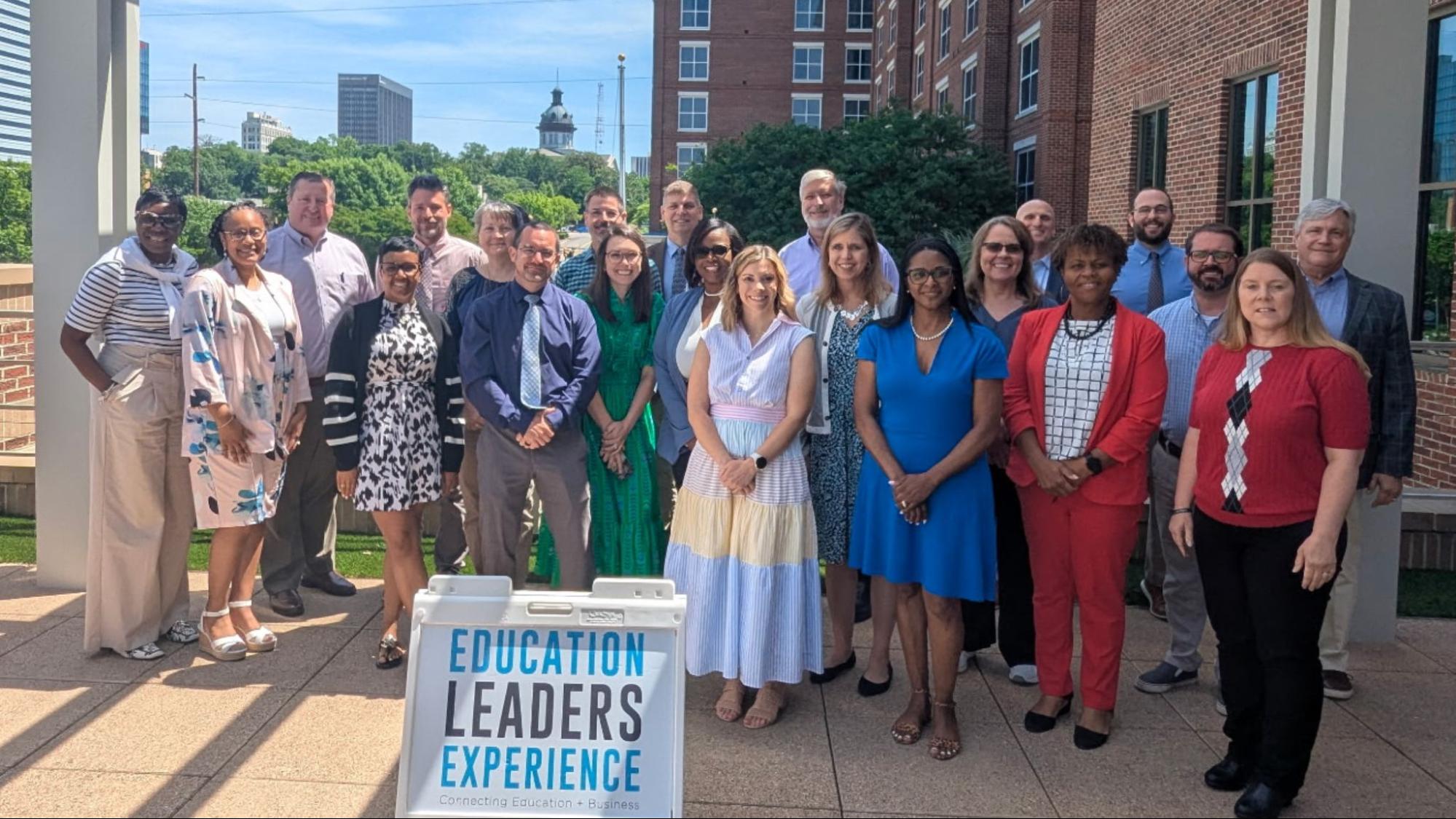
Leadership in Motion: How the Education Leaders' Experience Is Reshaping South Carolina’s Leadership Landscape
When leaders across South Carolina entered the Education Leaders Experience (ELE), they didn’t just gain new knowledge; they entered a new way of thinking about themselves, their teams, and the work ahead. From seasoned administrators to newly placed district leaders, the Iota Cohort has become a living example of how intentional leadership development fosters transformation across systems.
ELE is not a sit-and-get program. It is a community of practice, a space for challenge and reflection, and a platform where leaders learn not only from facilitators but also from one another.
From retreat sessions and leadership style assessments to micro-credentials and storytelling activities, each experience is designed to stretch participants in ways that lead to sustainable growth.
For LaWana Robinson-Lee, the shift was immediate: “This experience shifted my thinking.” For others, the change was gradual but no less impactful. Felicia Madden reflected, “ELE allowed me the time and space to be around a diverse group of educators to gain knowledge and ideas to take back to my district.”
Participants frequently cited the concept of exposure. Austrai Bradley shared, “Animation studio right here in SC. Mind-blown.” Karla Harper noted, “Each session will allow me to bring back information to my colleagues and, most importantly, opportunities for students. Key Word of the day: Exposure.”
These experiences weren’t limited to professional settings. They reflected ELE’s deeper mission: to build leadership capacity across systems by showing what collaboration and shared vision can look like when people feel connected and seen.
Across districts and roles, four major themes emerged from the voices of participants:
- Community, Networking, and Belonging
ELE built a bridge between educators across regions, roles, and systems. That sense of community mattered deeply for participants new to the state or their position.“Being new to the area, I was able to access this network of talent and knowledge to help me grow,” shared one leader. Another, Kendra Harper, wrote, “As a new resident of the state, this was an excellent opportunity to meet and engage with new leaders.”Education leaders are not afforded many opportunities to expand their networks and perspectives beyond the four walls of their buildings during traditional work hours. ELE provides community building opportunities, creating new curriculum and workforce development opportunities for learners and educators alike.
- Leadership Self-Awareness and Style
Many leaders left the ELE with a new understanding of how they lead and how they could grow. Dr. Carolyn Donelan shared, “The leadership assessments allowed me to reflect on my leadership strengths and concerns. I plan on sharing these results with my staff to discuss ways to flex my style to fit their needs.”Others noted how their styles had evolved. Julia Kaczor reflected, “The ELE ‘What’s My Leadership Style’ identified my strength as Spirited, which shows my evolution since I once was Direct. This change shows my transformation as an instructional leader.”Participants were encouraged not to be defined by one style but to recognize the range of leadership tools available. One participant noted, “The activities we participated in made us rethink what we thought we knew about ourselves.”
- From Reflection to Action
ELE participants didn’t just reflect; they brought the learning back to their districts. Casey Faulkenberry explained, “Moving forward, I plan to use a strategic approach for groups or teams to begin their work by focusing on collective commonalities and then working out to individual needs.”Others spoke about leading with greater purpose and delegation. Inspired by speaker Ron Harvey, Melissa Moore shared, “I plan to lead with less intervention and more delegation, allowing my team to grow in their leadership skills and to create a sense of purpose, a supportive environment, and open communication.”Susan Hendricks reflected, “My mission should be my focus for all I do. Everything else will fall into place if it fits with my values and purpose.”
These insights from the Iota Cohort reveal a deep commitment to community, innovation, resilience, and connection, both within and beyond the field of education. As the Iota Cohort of the Education Leaders Experience continues, its participants are already reshaping the leadership landscape in South Carolina. Through personal growth, professional insight, and deep connection, ELE creates more than leadership development. It is making a leadership movement.
Education Leaders Experience (ELE) is a ten-month community-based outreach program for South Carolina education professionals. The ELE program was created by Colonial Life in 2016 and is administered in partnership with the Center for Educational Partnerships (CEP) at the University of South Carolina with facilitation technical assistance by Verbalizing Visions, LLC.

The Journey to Where I Was Meant to Be: HOME
Have you ever been stuck in a comfortable place, but know in your gut that it’s time for a change? You muster up the courage to take that step and it becomes the most rewarding experience of your life. That’s just what I did.
I previously taught four-year-old kindergarten at Nursery Road Elementary School for nine amazing years. I developed relationships, supported students in their first school experience, coached parents through their “babies” going to school, grew as a teacher, and became a mom. I was content and comfortable. My only complaint was the long commute between school and home. For years, I dismissed that comfortable feeling as confidence and finally knowing what I was doing as a teacher.
But that wasn’t it. I was too comfortable and content — not pushing myself to grow beyond my comfort zone.
I knew I needed to step out of my comfort zone and do what was best for me, my family, and my teaching career. But just because I knew what I needed to do, doesn’t mean the decision was easy. It was hard, stressful, and confusing. It stirred up feelings of anxiousness, self-doubt, and questions of, “What if?” I learned that even though change can be challenging when you follow your heart, it can also be rewarding.
Three years ago, I accepted a job teaching first grade at the school in my community where my children were zoned to attend.
From the moment I walked across the historic wood floors in the main building at Little Mountain Elementary School, I knew I was “home.”
Had I not taken this leap of faith three years ago, leaving a comfortable place, I wouldn’t have learned so many new things about teaching first grade. I wouldn’t have had the experience of helping students become fluent readers, eager to pick up books. I wouldn’t have had the opportunity to teach in the community where I live. The change allowed me to be involved with my students and their families inside and outside the school building. This leap of faith has helped me grow and advocate for myself as a teacher and a student.
I have learned to love teaching at another grade level, in another school and district. Being nominated by my peers as Teacher of the Year shows I am positively impacting the students, teachers, and community. I am investing in the students in my community, and in turn, in my community’s future. And now through this writing, I can share my voice on my journey “home,” to Newberry County School District.
Three years later, it’s hard to imagine teaching or being anywhere else. Working with a team of teachers you love and respect makes it even better! The School District of Newberry is supportive of its teachers and students.
It is rewarding to work for a district that values you.
I have renewed my National Board Certification and completed all required classes for my Doctorate in Curriculum and Instruction from the University of South Carolina. I have been granted permission from the district office to conduct my research for the defense and completion of my dissertation. For the next two years, I will serve on the teacher forum for the district, where I will have the opportunity to share my voice, and the voices of my fellow teachers, with the superintendent and district office staff. I do all of this with the full support of my school district.
Over the past two years, teachers have participated in the creation of the district’s Instructional Delivery Model (IDM) which will be implemented this school year in Newberry County. All staff provided input in the development of this model. It will be used “to promote a common instructional language, promote consistency, and focus on exemplifying and expanding the best practices identified by our teachers.” The district allows teachers to mentor students from a local high school (Mid-Carolina High School) and Newberry College, to come and learn from us, providing an opportunity to showcase our excellent school, district, and the amazing students we teach.
In another example of districtwide collaboration, schools explored and evaluated different reading curricula approved by the state. Each grade level ranked the curriculum on many criteria. Our data was compiled as a school, and the district used this data to make an informed decision on the reading curriculum that our district would use. Having this platform to share our voices made our opinions feel valued. We used a critical eye when evaluating each resource, considering what would best fit the needs of our students.
Though my journey didn’t start at Little Mountain Elementary, I know all my experiences led me here.
My prior experiences shaped me into the teacher I am. I am constantly reminded of why I decided to leave a comfortable place and am rewarded for this decision by the students I teach and the school district I serve. Seeing the small steps my students take toward their educational goals inspires me to keep chasing my dreams. The excitement on their faces when they learn something new or read a chapter book for the first time is beyond satisfying.
While everyone’s journey is different, that feeling of being “home” leaves a lasting impression and impacts the lives you touch.
Jennifer Long is a first-grade teacher at Little Mountain Elementary School in Newberry County. This is her thirteenth year of teaching, and she has taught in Richland 1, Lexington Richland 5, and Newberry County School Districts. She is a proud wife and mother of three children.